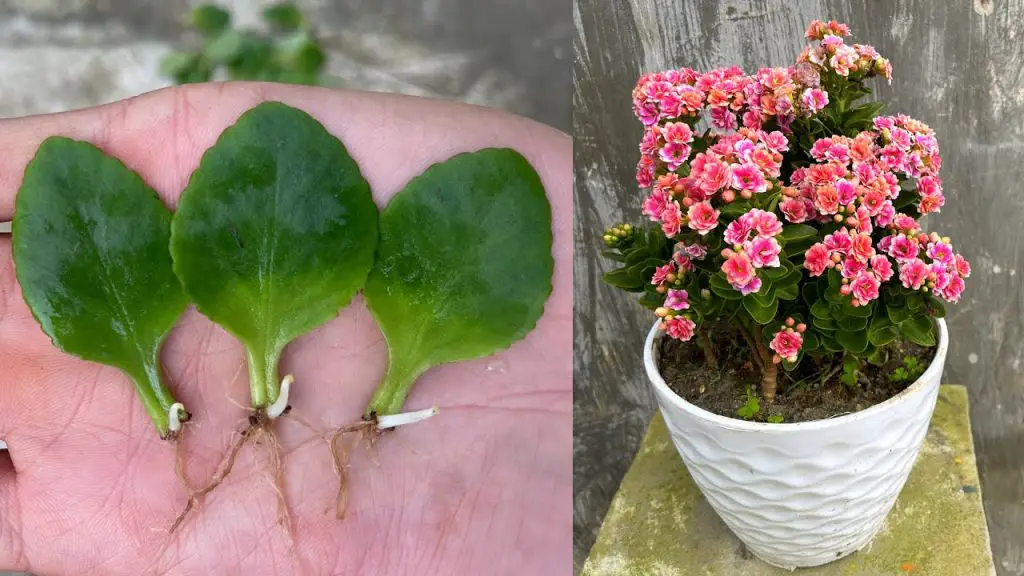
Kalanchoe is a stunning, low-maintenance plant that can brighten up any home with its vibrant pink flowers. Whether you’re a beginner gardener or a seasoned plant enthusiast, propagating Kalanchoe from its leaves is a simple and rewarding way to grow this beautiful succulent. In this article, we’ll explore how to plant Kalanchoe with leaves and enjoy its year-round blooms.
Why Choose Kalanchoe?
Kalanchoe, a popular succulent, is known for its resilient nature and colorful blooms. The plant thrives indoors and is particularly easy to care for, making it ideal for both novice and experienced gardeners. The flowers of Kalanchoe typically bloom in vibrant pinks, adding a burst of color to your space. Beyond aesthetics, Kalanchoe is also great for air purification and low-maintenance care.
One of the most fascinating aspects of Kalanchoe is its ability to propagate easily from its leaves. This means you can create new plants from an existing one, and with proper care, enjoy beautiful blooms for years to come.
Materials Needed for Planting Kalanchoe with Leaves
To successfully propagate Kalanchoe from leaves, you’ll need the following materials:
- Healthy Kalanchoe plant (with mature leaves)
- Sharp, clean scissors or pruning shears
- A small pot or container (with drainage holes)
- Well-draining soil (preferably cactus or succulent mix)
- A small tray or saucer for catching excess water
- Sunlight (bright, indirect light)
Steps to Plant Kalanchoe with Leaves
1. Select and Cut Healthy Leaves
Begin by choosing a healthy Kalanchoe plant. Look for mature leaves that are free from damage or disease. Using sharp, clean scissors or pruning shears, cut a leaf from the base of the plant. Ensure the cut is clean to avoid damaging the plant or the leaf.
2. Let the Cut Leaf Callus
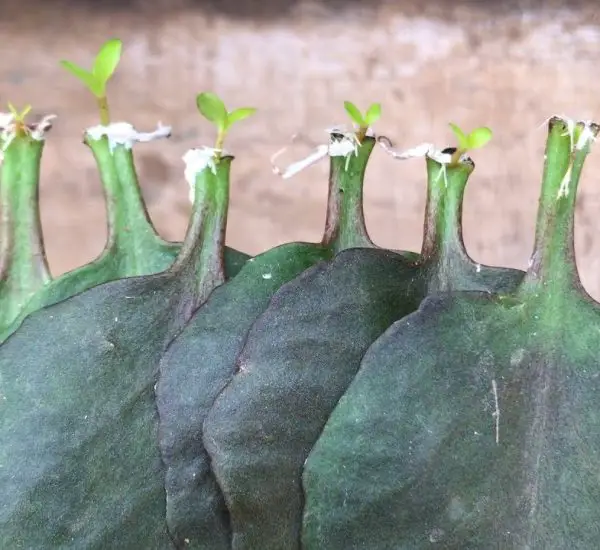
After cutting the leaf, place it on a dry surface in a warm area for about 1-2 days. Allow the cut end of the leaf to callus over. This process is essential to prevent the leaf from rotting when planted in soil.
3. Prepare the Soil and Pot
Fill your small pot with a well-draining soil mix, such as cactus or succulent soil. Kalanchoe does not like to sit in waterlogged soil, so ensure the container has proper drainage. Gently pat the soil down to remove any air pockets and level the surface.
4. Plant the Leaf
After the leaf has callused, place the cut end of the leaf gently on top of the soil. You do not need to bury the leaf deep; just rest it on the surface. Some gardeners choose to slightly bury the cut end, but this is not necessary. Make sure the leaf is stable and will not shift easily.
5. Water Lightly
Water the soil lightly around the base of the leaf, but avoid watering directly on the leaf itself. Overwatering can cause the leaf to rot. Ensure the soil stays moist but not soggy.
6. Provide Adequate Light
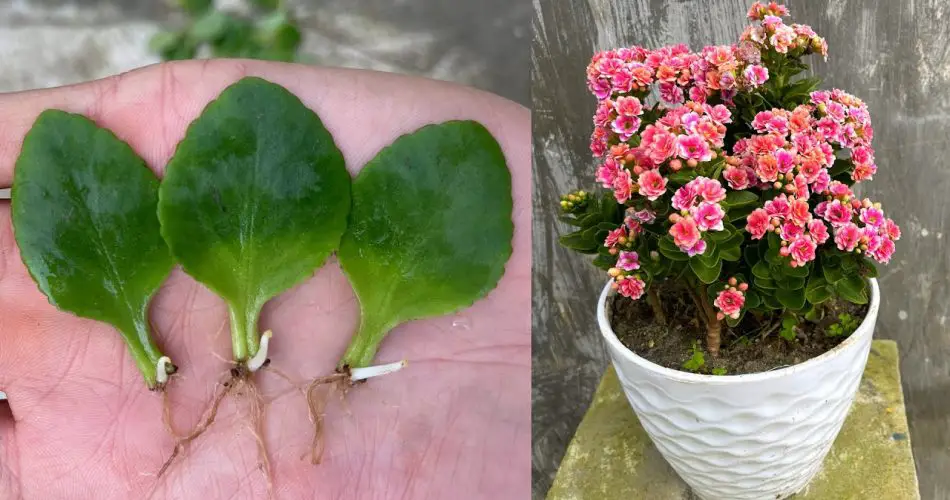
Place the pot in a bright location with indirect sunlight. Kalanchoe thrives in sunny areas, but direct sunlight may scorch the leaf. The leaf will begin to form roots and develop small offsets (new plants) at the base.
7. Patience and Care
It may take a few weeks for the leaf to develop roots and for new growth to appear. Once new plants emerge, you can begin to water the plant more frequently. However, ensure the soil is well-drained and not overly wet.
Caring for Your New Kalanchoe Plant
Once your new Kalanchoe plant is established, it will require the following care to thrive:
- Watering: Water your Kalanchoe only when the soil is dry to the touch. Overwatering can cause root rot. Ensure the pot has proper drainage.
- Light: Place the plant in a bright, sunny spot where it can receive at least 4-6 hours of indirect sunlight each day.
- Fertilizing: During the growing season (spring and summer), feed your plant with a balanced fertilizer every 4-6 weeks. In fall and winter, reduce fertilizing as the plant enters dormancy.
- Temperature: Kalanchoe prefers warm temperatures between 60-85°F (15-29°C). Avoid placing it in drafts or areas with extreme temperature fluctuations.
- Pruning: Regularly remove any dead or damaged leaves to keep the plant looking neat and encourage new growth.
Why Grow Kalanchoe from Leaves?
There are several benefits to propagating Kalanchoe from leaves:
- Cost-Effective: Instead of buying new plants, you can easily propagate them for free.
- Easy to Grow: Kalanchoe is very forgiving, making it a great choice for beginners.
- Sustainable Gardening: Propagating from leaves is an eco-friendly way to multiply your plants without the need for excessive resources.
- Decorative: With its beautiful pink flowers, Kalanchoe adds a touch of elegance to any indoor space.
Conclusion
Planting Kalanchoe from leaves is a simple and rewarding process that allows you to enjoy gorgeous pink blooms in your home year-round. By following these easy steps, even beginners can create a thriving, flowering plant from a single leaf. The vibrant flowers and minimal care requirements make Kalanchoe an ideal choice for those looking to brighten up their home. Planting Kalanchoe with leaves is not only a fun gardening project but also a great way to nurture a beautiful plant that will flower for life.