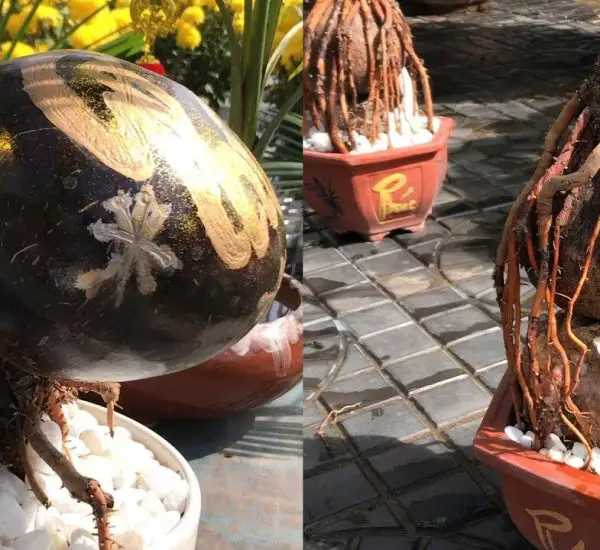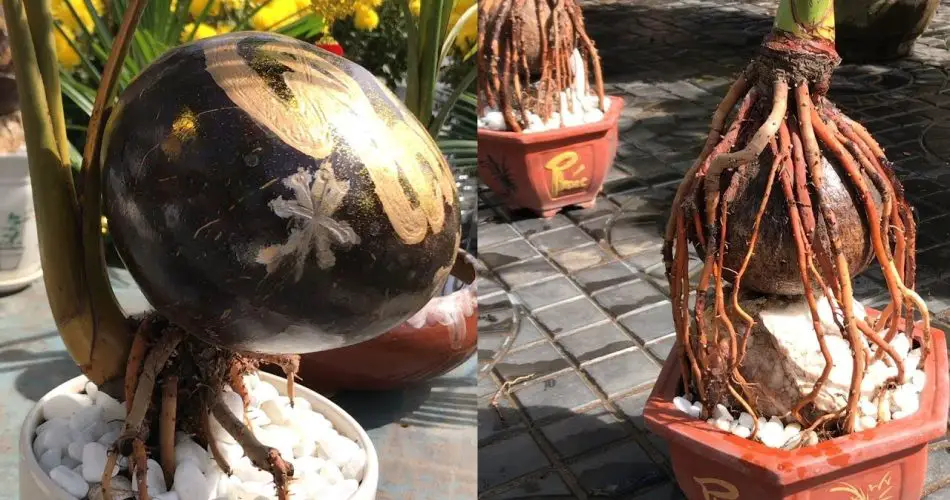
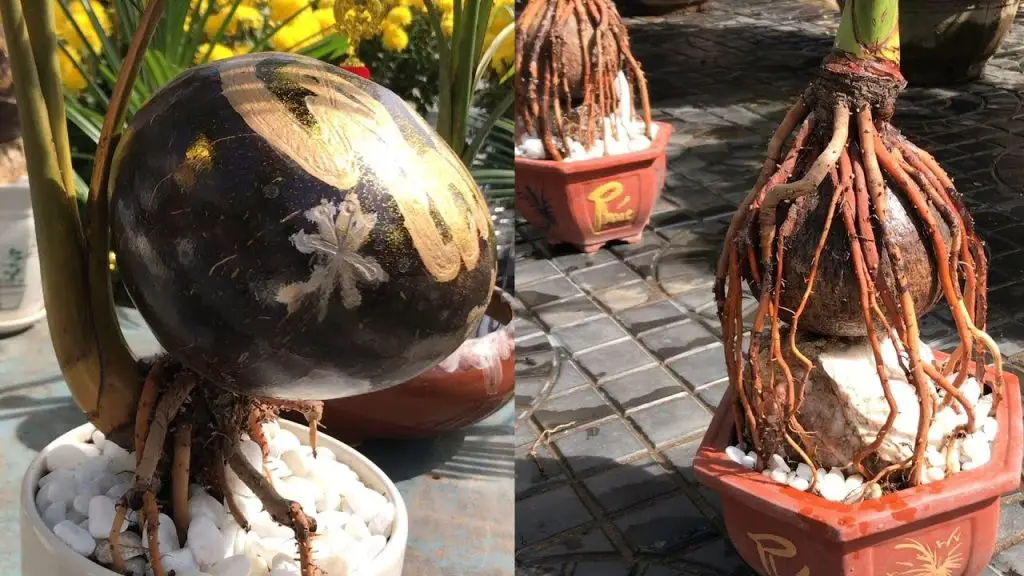
Transforming a coconut into a beautiful bonsai can bring a unique tropical flair to your indoor or outdoor space. Growing a coconut bonsai not only showcases your gardening skills but also creates a captivating scene. Here’s how to grow coconut successfully as a bonsai.
1. Selecting the Right Coconut
Choose a fresh coconut with a healthy shell. Look for one that has three “eyes” (small indentations) and feels heavy for its size. Ensure the coconut is not dried out or damaged, as a fresh coconut will have a higher chance of germination.
2. Germination Process
- Soak the Coconut: Place the coconut in water for 24 to 48 hours to help kickstart the germination process.
- Positioning: After soaking, place the coconut in a shallow container with the eyes facing up. Use a well-draining potting mix or coarse sand to support it.
- Warm Environment: Keep the container in a warm, humid location, ideally around 70°F to 85°F (21°C to 29°C). Ensure it receives indirect sunlight, as direct light can scorch the coconut.
3. Potting the Coconut
Once the coconut begins to sprout (which can take a few weeks), it’s time to pot it:
- Choose a Bonsai Pot: Select a small bonsai pot with drainage holes to prevent waterlogging.
- Plant the Coconut: Bury the coconut halfway into the soil, leaving the top half exposed. This allows the leaves to grow freely.
4. Watering and Care
- Water Regularly: Keep the soil consistently moist but not soggy. Water when the top inch of soil feels dry. Coconut prefers a humid environment, so consider misting the leaves.
- Fertilization: Use a balanced liquid fertilizer every month to provide essential nutrients. Follow the package instructions for dilution.
5. Shaping Your Coconut Bonsai
As your coconut grows, you can start shaping it:
- Pruning: Regularly prune the leaves and branches to maintain your desired shape. Focus on cutting back to promote bushier growth.
- Wiring: Use bonsai wire to guide the branches into the desired position. Be gentle to avoid damaging the plant.
6. Providing Light and Temperature
Coconut bonsai thrives in bright, indirect sunlight. If indoors, place it near a south-facing window. Maintain a warm temperature, as coconut palms are sensitive to cold.
7. Monitoring for Pests
Keep an eye out for common pests such as mealybugs or spider mites. If detected, treat with insecticidal soap or neem oil to protect your bonsai.
Conclusion
Creating a coconut bonsai is a unique and rewarding gardening project that can enhance your space with a tropical touch. By following these steps—selecting a fresh coconut, germinating, potting, watering, and shaping—you can cultivate a stunning coconut bonsai that delights all who see it. Enjoy the beauty and charm of this exotic plant!