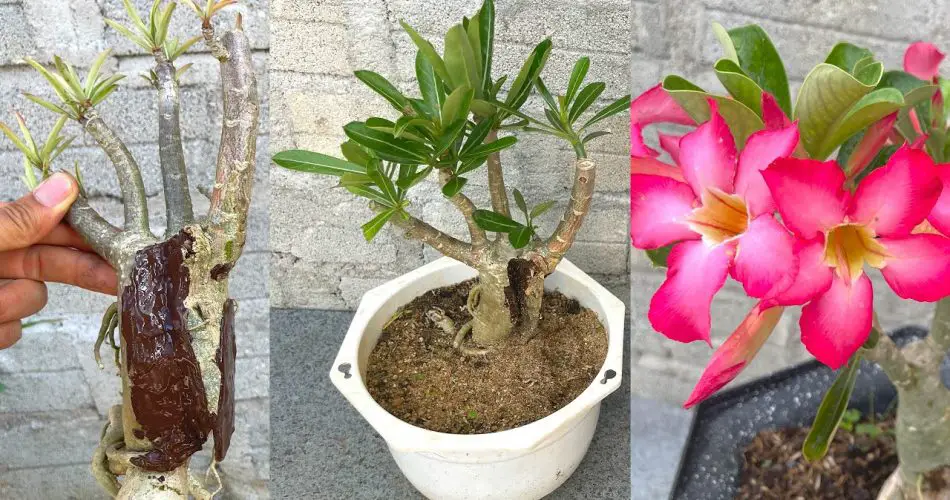
Adenium Obesum, also known as the Desert Rose, is a stunning flowering plant admired for its thick caudex, vibrant blooms, and resilience in hot climates. However, despite its hardy nature, root rot can be a major threat, often caused by overwatering or poor drainage.
If your Desert Rose is showing signs of soft, blackened roots or a mushy base, don’t worry! With the right steps, you can save your Adenium and bring it back to life. Here’s how to effectively treat root rot and ensure a healthy recovery.
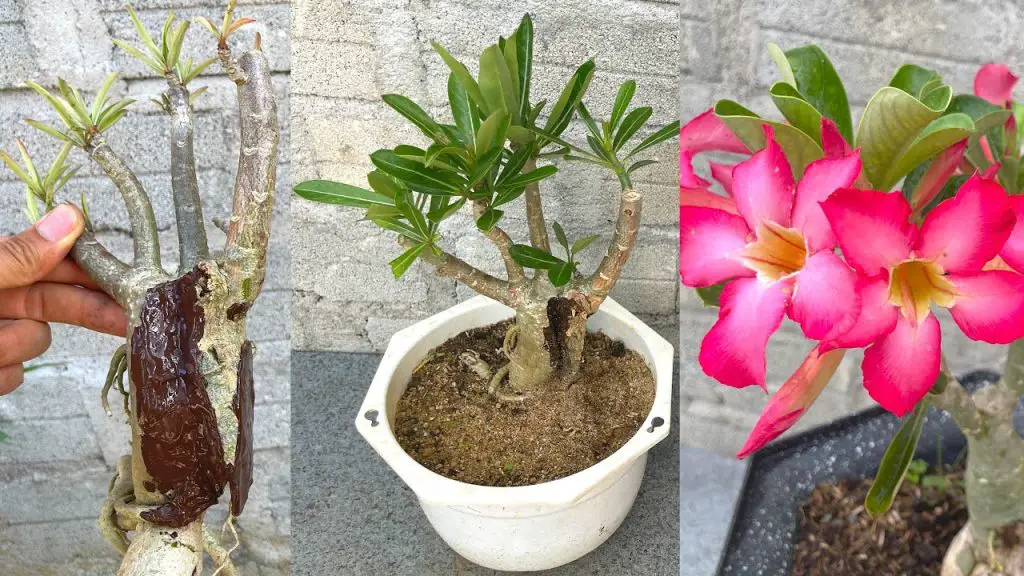
Step 1: Identify the Signs of Root Rot 🚨
The first step to saving your Adenium is recognizing the symptoms of root rot early. Look out for:
✔ Yellowing leaves that fall off easily.
✔ Soft, mushy roots with a black or brown color.
✔ A swollen caudex that feels squishy instead of firm.
✔ A foul smell from the soil or roots.
💡 Tip: If you suspect root rot, act quickly! The longer you wait, the harder it is to save the plant.
Step 2: Remove the Adenium from the Soil 🌱
To assess the damage and stop the spread of fungal infection, carefully remove your Adenium Obesum from its pot:
✔ Gently lift the plant out of the soil and shake off excess dirt.
✔ Inspect the roots and caudex for signs of decay.
✔ Use clean pruning shears to trim off all rotten or blackened roots.
💡 Tip: Always sterilize your pruning shears before and after cutting to prevent spreading disease.
Step 3: Dry and Treat the Wounded Areas ☀🛠
Since Adeniums store water in their caudex, they need to dry out properly before repotting:
✔ Place the plant in a shaded, airy spot for 24–48 hours to allow cut areas to dry.
✔ Sprinkle cinnamon powder or fungicide on the wounds to prevent infection.
✔ Avoid watering during this period to help the plant recover.
💡 Tip: Cinnamon is a natural antifungal that protects the plant from further rot.
Step 4: Repot in Well-Draining Soil 🏺
Once your Adenium Obesum has dried and healed, it’s time to repot it correctly:
✔ Choose a pot with drainage holes to prevent water from sitting at the roots.
✔ Use a fast-draining soil mix, such as a combination of:
- 60% coarse sand or perlite
- 30% cactus or succulent soil
- 10% organic matter like coco peat or compost
✔ Replant the Adenium so that the base of the caudex is slightly above the soil line.
💡 Tip: Do not water immediately after repotting! Wait at least 3–5 days to allow the plant to settle.
Step 5: Adjust Watering and Care Routine 💦
One of the main causes of root rot is overwatering. To prevent it from happening again:
✔ Water sparingly – Only when the soil is completely dry.
✔ Provide full sunlight – At least 5–6 hours daily to keep the caudex healthy.
✔ Avoid watering the caudex directly – Instead, water the soil around the base.
✔ Check the roots every few months – If you see any signs of decay, act quickly!
💡 Tip: During winter or dormancy periods, reduce watering significantly to prevent rot.
Final Results: A Healthy, Thriving Adenium! ✨
By following these steps, your Adenium Obesum can fully recover from root rot and continue to thrive. With proper care, it will reward you with beautiful, vibrant flowers and a strong, thick caudex.
Have you ever saved a Desert Rose from root rot? Share your experience and tips below! 🌿💖