Adenium obesum, commonly known as the Desert Rose, is a striking bonsai flower that requires special care, particularly when it comes to soil management. Changing the soil in your Adenium obesum bonsai is crucial for maintaining its health, promoting proper root growth, and ensuring vibrant flowering. In this article, I’ll guide you through the process of changing the soil for your Adenium bonsai flower pot and explain the importance of using the right soil mix.
Why Change the Soil for Adenium Obesum Bonsai?
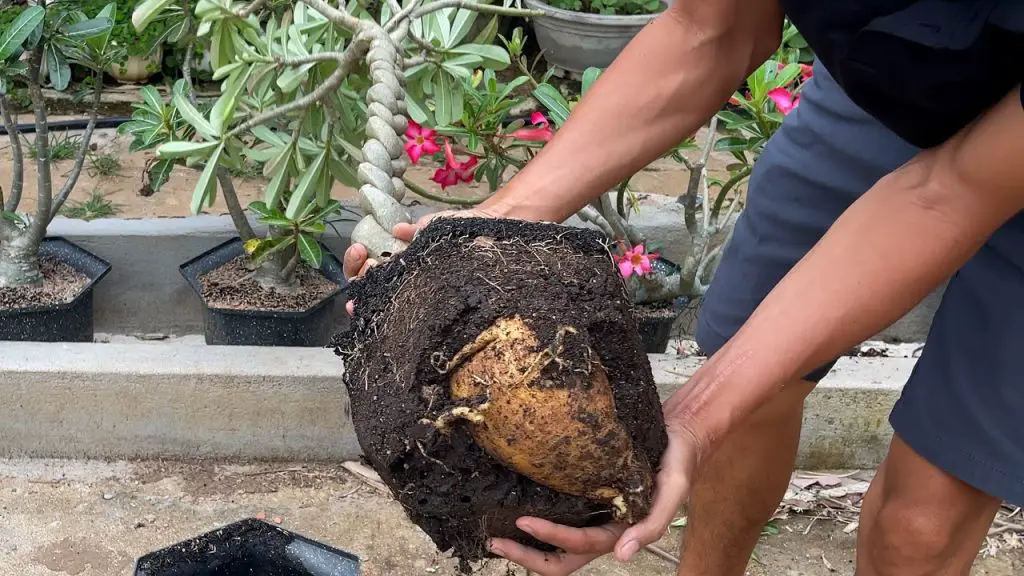
The soil in which your Adenium obesum grows plays a critical role in its overall health. Over time, the soil can become compacted, lose its nutrients, or even become waterlogged, all of which can hinder the plant’s growth. By changing the soil, you’re ensuring that your bonsai continues to receive the right nutrients, good drainage, and an optimal environment for root development.
Some reasons for changing the soil include:
- Root Health: The roots of the Adenium need space to breathe and grow. Compacted soil can lead to root rot.
- Nutrient Management: As plants grow, they deplete the nutrients in the soil. Replacing the soil refreshes the nutrient content.
- Better Drainage: Adenium obesum thrives in well-draining soil. Over time, soil can become less effective at draining water, which may lead to root rot.
When to Change the Soil for Adenium Obesum Bonsai?
Timing is important when changing the soil of your Adenium bonsai. It’s best to repot the plant during its dormant period, usually in early spring before it starts actively growing or flowering. You should also consider repotting if:
- The soil appears compacted or clumpy.
- You notice poor drainage or water pooling at the top.
- Your Adenium bonsai’s growth has slowed down, and it’s not flowering as it should.
Steps for Changing the Soil of Your Adenium Obesum Bonsai
Follow these simple steps to change the soil in your Adenium obesum bonsai flower pot:
1. Prepare the New Soil Mix
The first step in changing the soil is to prepare the new soil mix. Adenium obesum prefers well-draining soil that is slightly acidic to neutral. A good mix can include:
- Cactus soil or succulent soil as the base.
- Perlite or pumice to improve drainage.
- Sand or gravel to add texture and allow water to pass through easily.
- Optionally, a small amount of organic compost for added nutrients (but don’t add too much as Adeniums prefer less rich soil).
You want the mixture to be light, porous, and quick-draining to avoid any water retention around the roots.
2. Prepare the Bonsai Pot
While preparing the soil, also make sure that your bonsai pot is ready. If you’re reusing an old pot, check for any cracks or damage that could affect the plant’s health. Make sure the pot has a drainage hole to allow excess water to escape, preventing root rot.
3. Remove the Adenium From the Pot
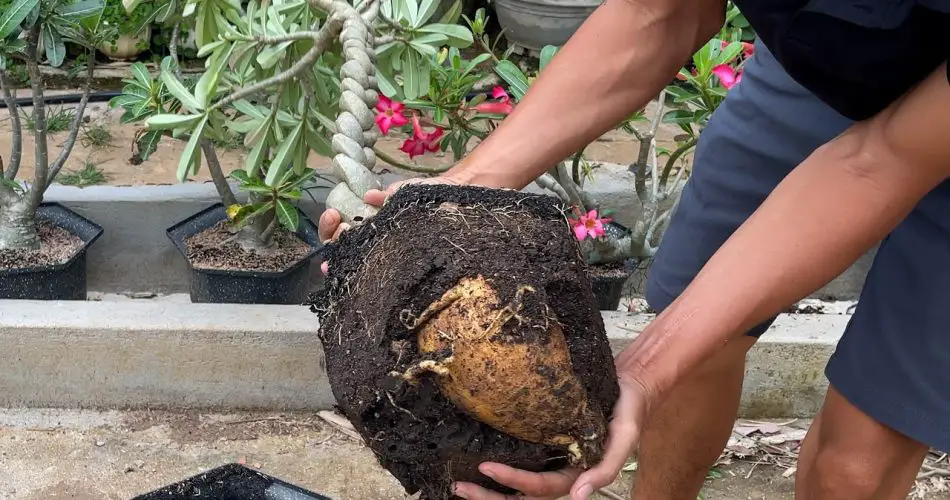
Next, gently remove your Adenium obesum from its old pot. You can do this by carefully tipping the pot sideways and tapping the sides to loosen the plant. If it’s stuck, you can gently use a tool like a small spade to work around the edges of the root ball.
When removing the plant, be careful not to damage the delicate roots. The root ball should stay intact as much as possible.
4. Inspect and Trim the Roots
Once the plant is out of the pot, take a moment to inspect the roots. Healthy roots are white or light tan and should feel firm. Remove any rotten, damaged, or dead roots, cutting them away with sterile pruning scissors or a sharp knife.
While you’re trimming, you can also cut back the top growth if the plant has become too leggy. This helps the plant redirect energy to its roots and overall growth.
5. Place the Plant in the New Pot
Now that the roots are clean and trimmed, place the Adenium in its new pot. Fill the bottom of the pot with a small amount of the prepared soil mix. Position the plant so that the root ball is level with the top of the pot. Fill around the roots with more soil, pressing lightly as you go to eliminate any air pockets.
Pro Tip: Make sure the caudex (the thickened stem) is slightly above the soil line, as Adeniums don’t like to sit in overly moist soil. This helps the plant breathe and prevents rotting.
6. Watering After Repotting
After repotting, it’s important not to water the plant immediately. Allow the soil and roots to settle for a day or two. This gives the plant time to adjust and heal from any cuts or disturbances.
When you do water, make sure to give it a good soak, but avoid overwatering. Adenium obesum is drought-tolerant, so you want to allow the soil to dry out completely between waterings.
7. Care After Repotting
Once repotted, place the Adenium in a warm, sunny location with indirect sunlight to help it recover. Keep an eye on the soil moisture, ensuring it doesn’t stay soggy. As the plant recovers, you can start to fertilize it lightly with a balanced fertilizer every month to encourage healthy growth and blooming.
Conclusion
Changing the soil for your Adenium obesum bonsai is essential for maintaining its health and ensuring that it thrives. By following these simple steps and using the right soil mix, you can ensure that your plant will continue to grow strong and produce beautiful blooms. Remember, good drainage and regular care are key to growing a healthy Adenium, so don’t hesitate to change the soil whenever necessary! 🌱🌸