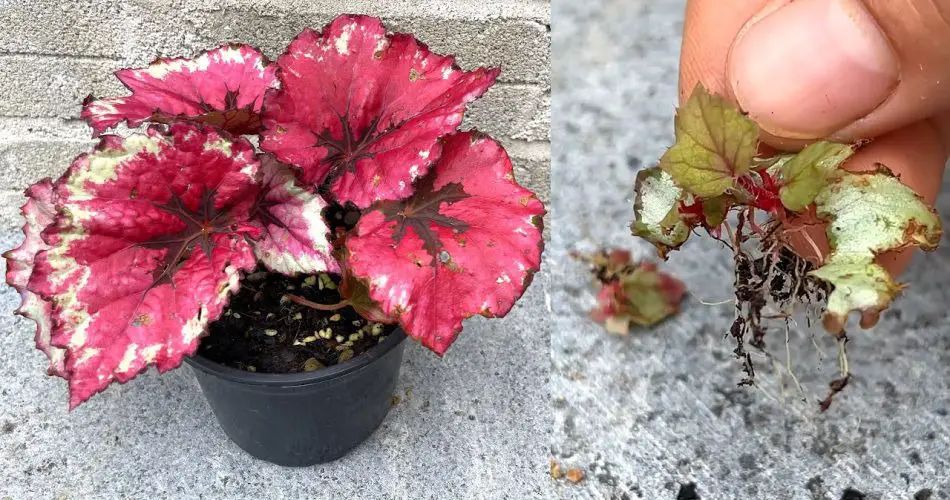
Thu Hai Duong, a variety of Begonia, is a beautiful and hardy plant prized for its decorative foliage and unique patterns. This Begonia species is particularly well-known for its vibrant leaves, which can range in color from dark green to silver-gray with striking red veins. If you’re looking to expand your collection of this stunning plant, one of the most effective methods of propagation is through leaf cuttings. This process allows you to grow new Thu Hai Duong plants from a healthy leaf, which is a simple and rewarding way to multiply your Begonia without needing to buy new plants.

In this article, we’ll explore the step-by-step process for propagating Thu Hai Duong by leaves, along with some essential Begonia plant care tips to help your new cuttings thrive.
Why Propagate Thu Hai Duong by Leaves?
Propagating Begonia Thu Hai Duong by leaves is an excellent method for several reasons:
- Easy and Cost-Effective: Unlike other propagation methods, leaf cutting propagation is straightforward, requiring only a healthy leaf, a sharp knife, and the right growing conditions. This method eliminates the need to purchase more plants.
- Rapid Growth: With proper care, leaf cuttings root quickly and develop into strong, new plants.
- Preserving Plant Characteristics: When you propagate from a leaf, the offspring will inherit the same genetic traits as the parent plant, ensuring that your new Begonias will have the same vibrant patterns and colorations.
Step-by-Step Guide to Propagating Thu Hai Duong by Leaves
Follow these detailed steps to successfully propagate Begonia Thu Hai Duong from leaves:
1. Choose a Healthy Leaf
Start by selecting a healthy and mature leaf from your Begonia Thu Hai Duong plant. Look for a leaf that is not damaged or diseased, as this could affect the success of your propagation.
- Tip: Choose a medium-sized leaf that’s not too young or too old, as these are the most likely to produce healthy cuttings.
2. Cut the Leaf
Using a sharp, clean knife or sterilized scissors, cut the leaf from the plant at the base of the stem. Make sure the cut is clean and smooth to prevent any damage to the leaf or the parent plant.
- Important: Leave a small section of the leaf stalk (petiole) attached to the leaf, as this will help the cutting root properly.
3. Prepare the Leaf for Propagation
Once you’ve removed the leaf from the parent plant, you can either propagate the leaf whole or cut it into sections, depending on the method you choose:
- Whole Leaf Propagation: If you prefer to propagate the entire leaf, ensure the leaf is healthy and free from disease.
- Leaf Section Propagation: You can also cut the leaf into multiple sections, each containing a vein or vascular bundle. This is an effective way to propagate multiple plants from a single leaf.
4. Apply Rooting Hormone (Optional)
While rooting hormone isn’t absolutely necessary, it can encourage faster root growth and improve the chances of success. Dip the cut end of the leaf stalk into the rooting hormone before placing it in soil or water.
5. Prepare the Propagation Medium
There are two primary methods for propagating Begonia Thu Hai Duong by leaf: soil propagation and water propagation. Both methods can work, but each has its own benefits.
- Soil Propagation:
- Use a well-draining potting mix, such as a cactus or succulent mix, or a combination of peat moss and perlite.
- Plant the leaf into the soil with the cut edge down, making sure the leaf is partially buried to secure it in place.
- Water lightly, ensuring the soil is moist but not soggy.
- Water Propagation:
- Fill a clean container with room temperature water and place the leaf in the water, ensuring the cut end is submerged but the leaf itself is above the water line.
- Change the water every few days to prevent stagnation and encourage healthy root growth.
6. Create the Ideal Environment for Rooting
Begonias require a humid environment to propagate successfully. Here are some tips for creating the perfect conditions for your Thu Hai Duong leaf cutting:
- Humidity: To maintain high humidity, cover the leaf with a plastic bag or use a humidity dome over the container or pot. This will help retain moisture and warmth.
- Light: Place the cutting in a location that gets bright, indirect light. Avoid direct sunlight, which can scorch the delicate cutting.
- Temperature: Keep the cutting in a room with temperatures between 65°F and 75°F (18°C-24°C), as this range is ideal for rooting.
7. Wait for Root Development
After a few weeks, you should start seeing roots emerging from the cut end of the leaf. In water propagation, roots can form in about 2-4 weeks, while soil propagation might take a little longer—up to 4-6 weeks.
- Tip: You can gently tug on the leaf to check for resistance, which indicates the cutting has developed enough roots to be transplanted.
8. Transplant the New Plant
Once the cutting has developed a healthy root system, it’s time to transplant it into its permanent home. Here’s how to proceed:
- Select a Pot: Choose a pot that is only slightly larger than the root ball of your cutting, as Begonias do better in slightly crowded conditions.
- Prepare the Soil: Use a well-draining potting mix suitable for Begonias. You can add perlite or sand to improve drainage.
- Plant the Cutting: Gently place the rooted cutting into the new pot, ensuring that the roots are well-spread and the leaf is at the surface of the soil.
- Water: Water the new plant lightly to settle the soil, and keep the soil moist but not soggy as it adjusts to its new home.
Essential Begonia Plant Care Tips for Healthy Growth
Now that you’ve successfully propagated your Thu Hai Duong, it’s important to continue providing the best care to ensure it thrives:
1. Light
Begonias, including Thu Hai Duong, prefer bright, indirect light. Too much direct sunlight can scorch their delicate leaves, while too little light can result in leggy, weak growth. Place your plant in a spot where it can get filtered sunlight or near a north or east-facing window.
2. Watering
Begonias are sensitive to overwatering, so it’s essential to water them carefully:
- Allow the top inch of soil to dry out before watering again.
- Ensure the pot has good drainage to prevent water from sitting in the soil and causing root rot.
- Use room temperature water, and avoid wetting the leaves to prevent fungal diseases.
3. Humidity
Since Begonias prefer high humidity, especially when they’re young, you can increase humidity by using a humidity tray filled with water and pebbles or by grouping plants together.
- Humidity Tip: If you live in a dry climate, consider using a humidifier or placing the plant in a bathroom with sufficient light.
4. Fertilizing
Feed your Begonia Thu Hai Duong with a balanced liquid fertilizer during the growing season (spring and summer) to promote healthy growth. Reduce or stop fertilizing in the fall and winter when the plant is not actively growing.
5. Temperature
Keep your Begonia in a temperature range between 65°F and 75°F (18°C-24°C). Avoid placing it in a drafty area or near heating vents, as temperature fluctuations can stress the plant.
6. Pruning
To encourage bushier growth and maintain the plant’s shape, trim any leggy or damaged stems. Be sure to use clean, sharp scissors to avoid introducing diseases.
Conclusion
Propagating Thu Hai Duong by leaves is a simple and effective way to grow new plants and expand your Begonia collection. By following the propagation steps and providing the right care, you can enjoy the stunning decorative foliage and vibrant flowering of this unique plant in your garden or home. Whether you’re a beginner or an experienced gardener, propagating Begonias by leaf cuttings is a fun and rewarding process that allows you to nurture healthy plants from the ground up. Happy gardening!