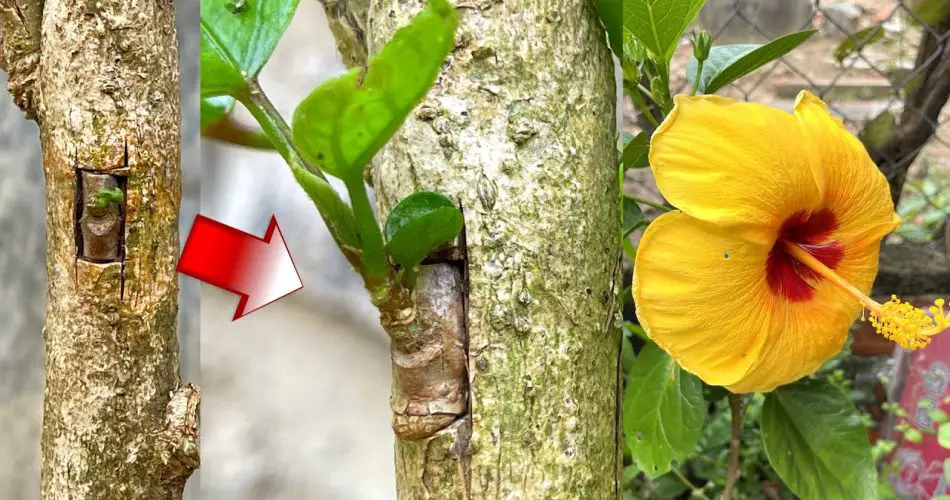
Grafting is a skilled technique that can enhance the growth and flowering of hibiscus plants. Whether you’re aiming to add a splash of vibrant color to your garden or improve the health of your hibiscus, understanding the different grafting methods can make a significant difference. Here, we explore two types of hibiscus grafting on a tree to help you plant hibiscus flowers successfully.
1. Cleft Grafting: Perfect for Strong, Established Trees
Cleft grafting is an effective method for integrating hibiscus branches onto established trees. This technique is ideal for creating a strong union between the hibiscus and the tree, ensuring robust growth and vibrant blooms.
Steps for Cleft Grafting:
- Select the Rootstock: Choose a healthy, established tree as the rootstock. Ensure it has a diameter that can accommodate the size of the hibiscus cutting.
- Prepare the Cutting: Select a healthy hibiscus branch with at least two or three buds. Trim it to a suitable length, making a diagonal cut at the base.
- Prepare the Rootstock: Make a vertical cut down the center of the rootstock, about 2-3 inches deep. This cut will create a cleft where the hibiscus cutting will be inserted.
- Insert the Cutting: Gently insert the prepared hibiscus cutting into the cleft of the rootstock. Ensure the cambium layers (the green part of the bark) of both the cutting and rootstock align.
- Secure and Seal: Use grafting tape or a similar material to secure the graft. Apply a layer of grafting wax or sealant to prevent moisture loss and infection.
- Aftercare: Keep the grafted area moist and protected. Monitor for signs of growth and ensure the union remains stable.
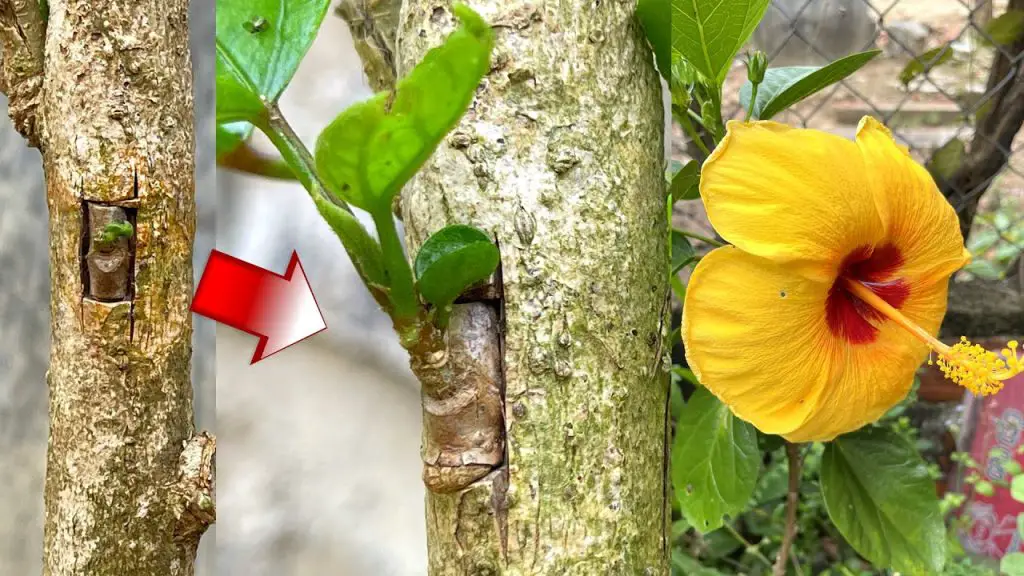
2. T-Budding: Ideal for Younger Trees and Ornamental Plants
T-budding is another grafting technique that works well for integrating hibiscus onto younger trees or ornamental plants. This method allows for precise control and is suitable for smaller grafting projects.
Steps for T-Budding:
- Select the Scion: Choose a healthy hibiscus bud that is about to open. The bud should be free from diseases and pests.
- Prepare the Rootstock: Select a young, healthy tree or ornamental plant with a smooth, green bark. Make a horizontal cut through the bark, followed by a vertical cut down the center to form a T shape.
- Prepare the Bud: Carefully cut the hibiscus bud from the scion, leaving a small shield of bark attached. The cut should be clean and include a bit of wood beneath the bud.
- Insert the Bud: Slide the hibiscus bud under the flap of bark on the rootstock, ensuring it fits snugly. The cambium layers should align.
- Secure and Seal: Wrap the grafted area with grafting tape or a similar material. Apply a grafting sealant to protect the bud and prevent moisture loss.
- Aftercare: Keep the area moist and monitor the bud for signs of growth. Once the bud has taken, remove any remaining tape or sealant.
By mastering cleft grafting and T-budding, you can successfully plant hibiscus flowers on trees, enhancing both their beauty and resilience. These techniques allow you to customize your garden with vibrant hibiscus blooms and create stunning, long-lasting displays. Embrace these methods and watch your hibiscus thrive in its new, grafted home.