Adenium, commonly known as Desert Rose, is a striking plant ideal for bonsai cultivation due to its unique and attractive appearance. Creating a flower pot Adenium bonsai with beautiful spreading roots can enhance the aesthetic appeal of this hardy plant. Here’s a step-by-step guide to help you craft a stunning Adenium bonsai.
Why Adenium is Ideal for Bonsai
Adenium’s distinctive features, such as its thick trunk, succulent leaves, and vibrant flowers, make it a perfect candidate for bonsai. The plant’s natural root structure can be shaped into an attractive bonsai with proper care and techniques.
Steps to Create an Adenium Bonsai with Beautiful Spreading Roots
- Select a Healthy Adenium Plant:
- Choose Your Plant: Start with a healthy Adenium plant that has a well-developed root system. Look for a plant with an interesting trunk shape and vibrant foliage.
- Prepare the Pot:
- Pot Selection: Choose a suitable bonsai pot that is slightly larger than the root ball of the plant. The pot should have drainage holes to prevent waterlogging.
- Soil Mix: Use a well-draining bonsai soil mix. A blend of sand, perlite, and potting soil works well for Adenium. This mix ensures good aeration and drainage.
- Repotting and Root Shaping:
- Remove the Plant: Carefully remove the Adenium from its current pot. Gently loosen and trim the roots if necessary to fit the new pot.
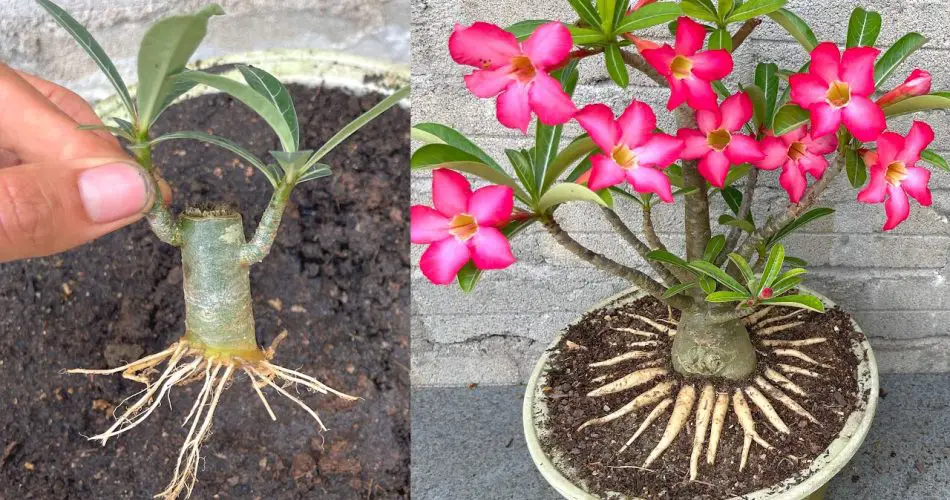
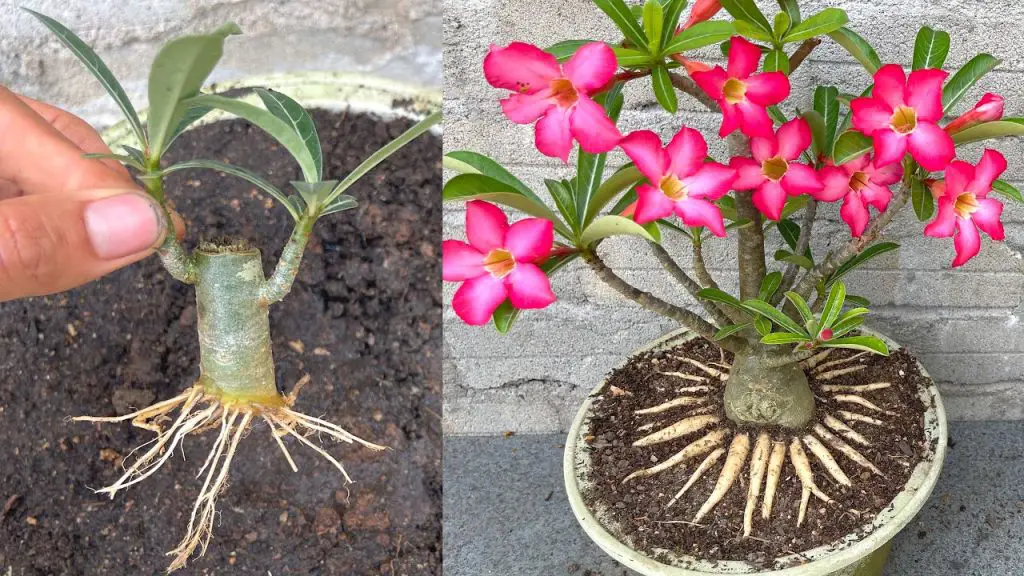
- Shape the Roots: To create beautiful spreading roots, trim back any straight or undesirable roots. Encourage the roots to spread outward by carefully arranging them in the pot. This shaping helps in developing a pleasing root structure.
- Planting and Initial Care:
- Positioning: Place the Adenium in the center of the pot and spread the roots evenly. Fill the pot with your bonsai soil mix, ensuring the roots are well-covered and supported.
- Watering: Water the plant thoroughly after repotting. Adenium prefers a drying-out period between waterings, so ensure the soil is allowed to dry out somewhat before the next watering.
- Ongoing Maintenance:
- Pruning: Regularly prune the Adenium to maintain its desired shape and promote branching. Prune back any excessive growth and shape the branches to complement the root structure.
- Fertilization: Feed the Adenium with a balanced fertilizer designed for bonsai or flowering plants. Follow the recommended feeding schedule for optimal growth.
- Encouraging Root Development:
- Root Exposure: As the Adenium grows, you can expose more of the roots by carefully removing some soil around the base. This technique highlights the beautiful spreading roots and enhances the overall bonsai appearance.
- Root Health: Ensure the roots are free from rot and diseases. Healthy roots contribute to a thriving plant and a visually appealing bonsai.
Why This Method Works
- Aesthetic Appeal: Shaping the roots and trunk of Adenium into a bonsai form enhances the plant’s natural beauty and creates a visually striking display.
- Compact Growth: Adenium’s ability to adapt to bonsai cultivation makes it a perfect candidate for this art form, with its thick trunk and beautiful root system adding to its charm.
Additional Tips for Adenium Bonsai Care
- Light Requirements: Place your Adenium bonsai in a location with bright, indirect sunlight. Adenium thrives in warm conditions and needs ample light for healthy growth.
- Temperature: Adenium prefers warm temperatures and should be protected from frost. Keep the plant in a temperature range of 60-80°F (15-27°C).
Creating an Adenium bonsai with beautiful spreading roots is a rewarding and artistic process. By carefully selecting your plant, shaping its roots, and providing the right care, you can craft a stunning bonsai that highlights the unique features of this remarkable plant. Embrace the art of bonsai with Adenium and enjoy the beauty and elegance of your own miniature masterpiece.