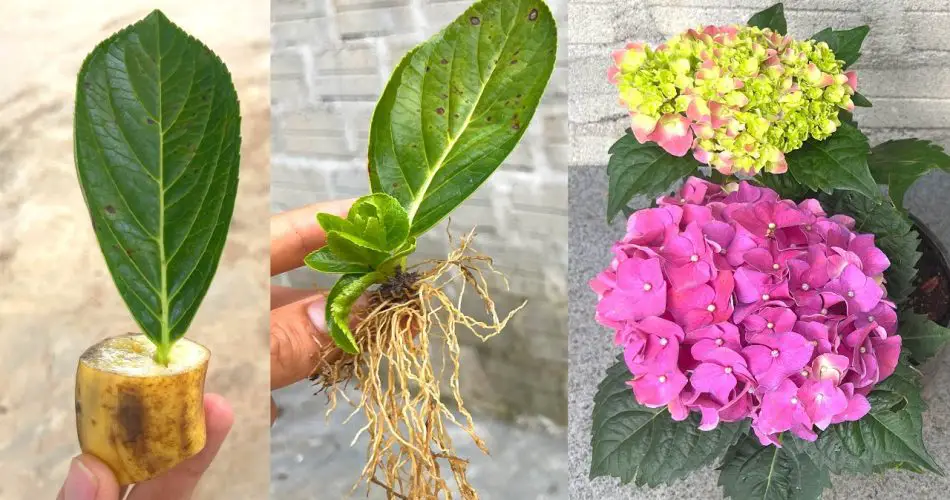
Hydrangeas are beloved for their stunning blooms and vibrant colors, and you can easily propagate them using leaves and bananas. This simple and natural method not only helps you expand your garden but also utilizes kitchen scraps effectively. Here’s how to grow hydrangeas using these materials.
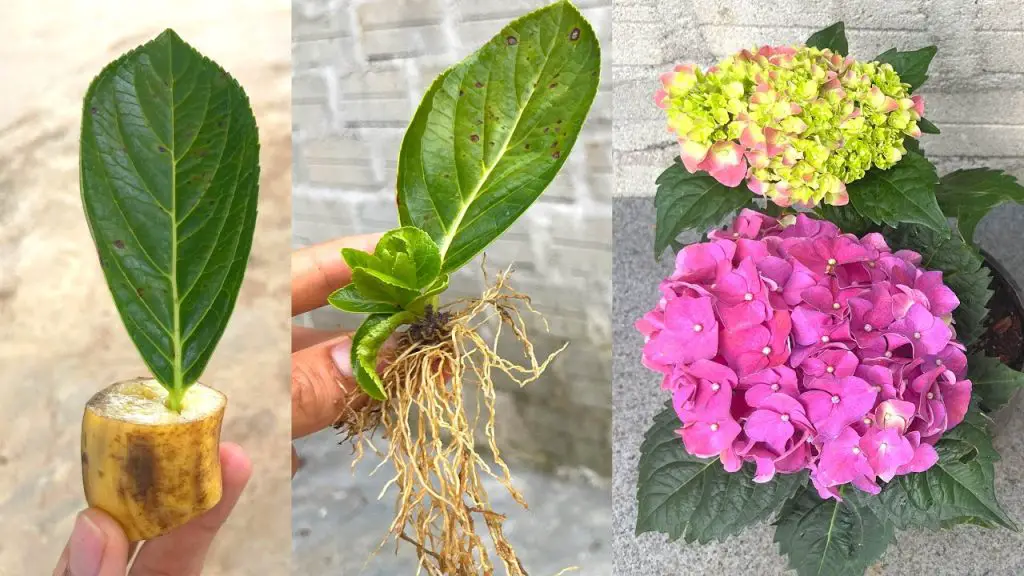
Benefits of Using Leaves and Bananas
- Leaves: They contain essential nutrients that can aid in the rooting process and encourage healthy growth.
- Bananas: Rich in potassium and phosphorus, banana peels provide a nutrient boost that enhances flower development and overall plant health.
How to Grow Hydrangeas from Leaves and Bananas
Materials Needed:
- Healthy hydrangea leaves
- Banana peels
- Potting soil
- Small pots or containers
- Water
Step-by-Step Instructions:
- Prepare the Leaves:
- Select healthy hydrangea leaves from a mature plant. Choose leaves that are green and free from any disease or pests.
- Cut the leaves into sections, ideally with a portion of the stem attached.
- Prepare the Banana Peels:
- Take fresh banana peels and cut them into small pieces. These will serve as a nutrient-rich base for your cuttings.
- Create a Planting Mixture:
- In your small pots, add a layer of potting soil and mix in the chopped banana peels. This will provide essential nutrients to support root growth.
- Plant the Leaf Cuttings:
- Insert the prepared hydrangea leaf cuttings into the soil mixture, ensuring that the cut end is buried about an inch deep.
- Space the cuttings apart to allow for air circulation and growth.
- Watering:
- Gently water the soil to keep it moist but not soggy. Overwatering can lead to rot, so monitor the moisture level regularly.
- Provide the Right Conditions:
- Place the pots in a bright location with indirect sunlight. Too much direct sun can scorch the leaves, while too little light may hinder growth.
- Keep the temperature warm, ideally between 65°F to 75°F (18°C to 24°C).
- Monitor and Care:
- After a few weeks, check for root development. You can gently tug on the cuttings; resistance indicates that roots are forming.
- Once the cuttings have rooted, you can transplant them into larger pots or directly into your garden.
Tips for Success
- Humidity: To retain moisture, you can cover the pots with plastic bags or use a humidity dome. Just make sure to ventilate them periodically to prevent mold.
- Timing: The best time to propagate hydrangeas is in the spring or early summer when the plant is actively growing.
Conclusion
Growing hydrangeas from leaves and bananas is a fun and eco-friendly way to expand your garden. By using natural materials, you not only promote plant health but also reduce waste. Give this method a try, and enjoy the beautiful blooms of your newly propagated hydrangeas!
Copy
Show Comments