If you’re looking to grow roses at home with minimal effort, using banana peels and plastic bottles for your rose cuttings is a game-changing technique. This method not only promotes faster root development but also encourages healthy growth. Let’s dive into how you can easily propagate your favorite roses using cuttings, banana peels, and a plastic bottle!

Why Use Banana Peels for Rose Cuttings?
Banana peels are a natural treasure for plant growth. They contain essential nutrients like potassium, phosphorus, and magnesium, which are all vital for the rooting process of plants. When used with rose cuttings, banana peels provide the extra boost needed to ensure strong, healthy roots and vibrant flowers.
Materials You’ll Need
- Rose cuttings (fresh, healthy branches from a mature rose plant)
- Banana peels (one or two, depending on the number of cuttings)
- Plastic bottles (clean, with the tops cut off)
- Water (room temperature)
- Scissors or pruning shears (for cutting the branches)
How to Grow Roses Using Banana Peels and Plastic Bottles
Follow these simple steps to propagate your rose cuttings using banana peels:
Step 1: Prepare the Rose Cuttings
Start by selecting a healthy rose branch with no flowers. The branch should be about 6 inches long, with at least two leaf nodes. Cut the stem just below a leaf node using clean scissors or pruning shears. This ensures that the cutting has the best chance of rooting.
Step 2: Prepare the Plastic Bottle
Take a plastic bottle and cut it in half, creating a container for the cutting. Remove the top portion and set it aside. The bottom part of the bottle will act as a propagation container for the cutting.
Step 3: Add Banana Peels
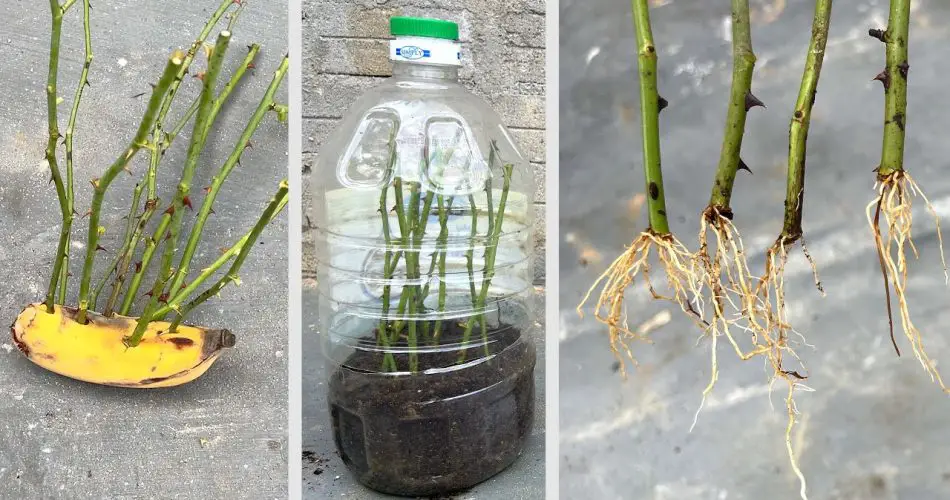
Next, take banana peels and cut them into small pieces. Place them at the bottom of the plastic bottle container. The potassium and magnesium from the banana peel will provide nutrients to the cutting, promoting quicker root development.
Step 4: Place the Rose Cutting in the Bottle
Insert the rose cutting into the bottle, ensuring that the base of the cutting is in contact with the banana peels. The peels will help nourish the cutting as it begins to root. Be sure that the cutting is stable and doesn’t fall over inside the bottle.
Step 5: Add Water
Fill the bottle with enough water to submerge the bottom part of the cutting, ensuring the cutting is well-hydrated. The rose cutting should be sitting in a small pool of water, allowing it to absorb the moisture while it begins to develop roots.
Step 6: Create a Greenhouse Effect
To help the cutting establish roots, place the top part of the plastic bottle over the bottom portion, creating a mini greenhouse. This helps maintain humidity, which is essential for the rooting process. Make sure to secure the top to create an airtight environment, but still allow for some airflow to prevent mold or rot.
Step 7: Place in a Warm, Bright Location
Place the entire setup in a bright location with indirect sunlight. Avoid direct sunlight, as it may overheat the cutting. The warmth will help accelerate the rooting process, and within a few weeks, you should start to see small roots forming.
Step 8: Monitor and Transplant
Keep an eye on your rose cutting. After about 4 to 6 weeks, you should see visible roots growing from the base of the cutting. At this point, you can carefully transplant your rooted rose cutting into a larger pot with fresh soil.
Why This Method Works
This method is so effective because it utilizes the natural nutrients in the banana peel, which promotes strong roots and healthy plant growth. The plastic bottle creates a controlled environment that traps moisture and heat, mimicking a greenhouse, which is perfect for encouraging root formation in your rose cutting.
Banana peels are rich in potassium, which is crucial for the development of strong, resilient roots. Additionally, the phosphorus in banana peels helps to strengthen the plant’s overall structure, leading to healthier, more vibrant roses when the cutting matures.
Tips for Success
- Use Fresh Cuttings: For best results, always use fresh rose cuttings, preferably taken during the growing season.
- Water Regularly: Ensure that the rose cutting stays hydrated by adding water as needed. Just be sure not to overwater, as the cutting should never be submerged in too much liquid.
- Monitor the Temperature: Keep your rose cuttings in a warm environment (around 70°F or 21°C) to speed up the rooting process.
- Use Multiple Cuttings: If you want to propagate several roses, feel free to repeat the process with multiple cuttings and banana peels in separate bottles.
Conclusion
Growing roses using banana peels in plastic bottles is a simple yet effective way to propagate healthy and vibrant roses at home. The natural nutrients from the banana peel provide the ideal environment for strong root development, while the plastic bottle mimics a greenhouse effect, ensuring the rose cutting stays moist and well-hydrated. With a little patience, you’ll be able to grow strong rose plants that bloom beautifully, all from the comfort of your own home.