Gardening often invites creativity, and sometimes the simplest methods yield the most remarkable results. One such technique that has gained attention is the practice of planting a rose branch with a potato. Surprisingly, this method can help both the rose and the potato take root, creating a thriving plant in a short amount of time. If you’re curious about how to use this method and the benefits it offers, read on!
Why Combine a Rose Branch with a Potato?
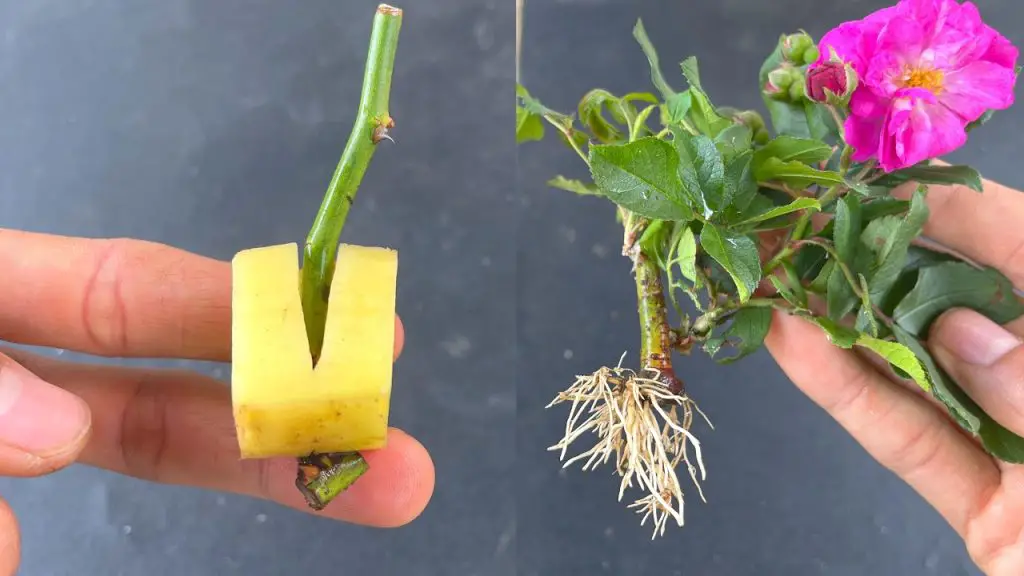
The combination of a rose branch and a potato might seem unusual, but it has a practical purpose. Potatoes are known for their ability to hold moisture and nutrients, making them an ideal medium for encouraging root growth in plants like roses. When you insert a rose cutting into the potato, the moisture from the potato helps keep the cutting hydrated, while the nutrients in the potato stimulate root development.
This simple yet effective method allows the rose to develop roots while benefiting from the potato’s natural resources. Over time, the cutting will establish its own roots, and the potato may sprout, growing into a new plant. It’s a win-win situation for both the rose and the potato!
Step-by-Step Guide to Planting a Rose Branch with a Potato
If you want to give this gardening technique a try, here’s how you can plant a rose branch with a potato for successful rooting:
Materials Needed:
- A healthy rose cutting (about 6 inches long)
- A potato (preferably large and firm)
- A sharp knife for cutting the rose branch
- Potting soil (optional, if transferring to a larger pot)
- A pot or container for planting
Step 1: Select a Healthy Rose Cutting
Choose a healthy rose branch from a mature plant. It should be about 6 inches long and have at least a couple of leaf nodes. The best time to take a cutting is during the early summer, when the rose is actively growing.
- Cut the branch just below a node (where the leaves attach to the stem).
- Make sure the cutting is free from pests and disease to avoid complications later.
Step 2: Prepare the Potato
Choose a potato that is firm and free from any rot or damage. Ideally, select a medium to large-sized potato, as it needs to be able to hold moisture for the rose cutting. Here’s how to prepare it:
- Make a small hole in the center of the potato using a knife. This hole should be deep enough to accommodate the rose cutting while leaving enough space for the potato to hold moisture.
- Insert the cutting into the hole, ensuring that at least one node of the rose cutting is below the surface of the potato.
Step 3: Plant the Potato and Rose Cutting
Place the prepared potato in a pot or container filled with potting soil. The potato will provide both moisture and nutrients to encourage the rose cutting to root. Here’s how to set it up:
- Place the potato horizontally in the soil, with the rose cutting firmly positioned inside it.
- If necessary, cover the potato with a thin layer of soil to help keep it in place and maintain humidity.
- Ensure the container has proper drainage to prevent waterlogging, which could cause rot.
Step 4: Care for the Rose and Potato
Once planted, the cutting will need consistent care to encourage root development. Here’s how to nurture both the rose and potato:
- Keep the soil moist, but avoid overwatering, which could lead to root rot. The potato will naturally release moisture to support the rose cutting.
- Place the container in a warm, sunny spot to encourage growth. The rose cutting needs light for photosynthesis, while the potato can thrive in moderate light conditions.
- Monitor for new growth: Within a few weeks, you should start to see new shoots from the rose cutting, and you may even notice the potato beginning to sprout.
Why This Method Works
The combination of the moisture and nutrients from the potato creates an optimal environment for the rose cutting to establish roots. Potatoes are rich in starch, which provides energy for the cutting, while also offering natural moisture retention to keep the cutting hydrated. The potato acts as a temporary root system until the rose cutting can develop its own roots, making it a unique and effective propagation method.
Benefits of Planting a Rose Branch with a Potato
This simple method offers several advantages for gardeners:
- Increased Rooting Success: The moisture and nutrients from the potato give the rose cutting a better chance of rooting successfully.
- Convenient and Simple: It’s a low-maintenance method that requires minimal tools and expertise.
- Sustainable Gardening: Using a potato to help propagate a rose cutting is an eco-friendly technique, as it minimizes the need for chemical rooting hormones or expensive propagation tools.
Conclusion: A Simple and Effective Gardening Hack
By planting a rose branch with a potato, you can take advantage of the natural resources in the potato to help the rose cutting root quickly and efficiently. This simple method is a great way to propagate roses, especially for beginner gardeners looking for an easy and natural technique. Give it a try, and you may be amazed at how well it works to encourage both rose growth and a healthy potato sprout! 🌹🥔