Growing Bougainvillea from cuttings is a popular method of propagation, but have you ever tried rooting Bougainvillea cuttings with potatoes? This unconventional technique can help provide the necessary moisture and nutrients to encourage root growth in the cuttings, especially for varieties like Lesser Bougainvillea. If you’re looking to experiment and want a more sustainable way to propagate your plants, this method could be a fun and effective solution. In this guide, we will show you how to use potatoes to root Bougainvillea cuttings and how to ensure they thrive.
1. What is Bougainvillea and Why Propagate It?
Bougainvillea is a vibrant, flowering vine known for its brightly colored bracts—which come in shades of purple, pink, red, orange, and white. Though native to South America, Bougainvillea is commonly grown in tropical and subtropical climates worldwide. The Lesser Bougainvillea variety, also known as Bougainvillea glabra, has smaller leaves and flowers, making it an excellent choice for smaller gardens or container planting.
Propagating Bougainvillea by cuttings is an affordable way to grow new plants. Instead of buying new plants, you can simply take stem cuttings, root them, and watch them grow into full-fledged vines. Typically, Bougainvillea is propagated through stem cuttings, but using potatoes in the process can provide extra nutrients and moisture, giving your cuttings a better chance to develop healthy roots.
2. Why Use Potatoes for Rooting Bougainvillea?
Potatoes are a unique tool for rooting plants like Bougainvillea because they provide a combination of the following benefits:
- Moisture Retention: Potatoes have high moisture content, which helps keep the cutting hydrated during the initial stages of rooting.
- Nutrient Source: Potatoes contain natural starches and nutrients that encourage root formation and help nourish the cutting.
- Easy to Use: Potatoes are readily available, inexpensive, and easy to handle, making this method simple and effective for gardeners of all levels.
By using potatoes, you can create a more controlled environment for the Bougainvillea cuttings, giving them the best chance to develop healthy, strong roots.
3. How to Grow Bougainvillea Roots with Potatoes: Step-by-Step Guide
Follow these simple steps to successfully propagate Lesser Bougainvillea using potatoes:
1. Choose the Right Bougainvillea Cuttings
- Select healthy Lesser Bougainvillea stems that are about 4 to 6 inches long. Choose semi-woody stems that are not too old or too young.
- The cutting should have at least 2-3 nodes (the areas where leaves grow from the stem). Nodes are crucial as roots will develop from these spots.
- Remove any leaves or flowers from the bottom half of the cutting, leaving a few leaves at the top to help with photosynthesis.
2. Prepare the Potatoes
- Choose healthy potatoes: Select firm potatoes without any rot or damage. Ideally, choose small to medium-sized potatoes that are large enough to support several cuttings but not too big that they take up too much space.
- Cut the potatoes: Use a knife to cut the potatoes in half or into quarters, making sure each piece has at least one “eye” or sprout. The sprout will encourage the development of roots for the cutting.
3. Insert the Cuttings into the Potatoes
- Make small holes or slits in the potato pieces using a knife or spoon. The hole should be deep enough to insert the cut end of the Bougainvillea cutting securely.
- Insert the cut end of the Bougainvillea stem into the potato, making sure that the cutting is about 1 to 2 inches deep in the potato. The exposed top of the cutting should be above the potato’s surface.
4. Prepare the Rooting Environment
- Prepare a container: You can use a shallow tray, pot, or plastic container to hold the potatoes with the cuttings.
- Soil: Add a light layer of well-draining soil or potting mix to the container. This will provide extra support for the cuttings and potatoes.
- Place the potatoes in the container with the cuttings standing upright in the soil. Make sure they are stable and won’t fall over.
5. Create a Humid Environment
- Cover the container with a plastic bag or clear plastic dome to trap moisture and create a greenhouse-like effect. This will help maintain high humidity around the cutting, which is essential for successful root development.
- Be sure the plastic doesn’t touch the cutting directly. You can use sticks or a small prop to hold the plastic above the cuttings.
6. Place in a Warm, Bright Location
- Position the container in a warm spot that gets indirect sunlight. The ideal temperature for rooting is around 70-75°F (21-24°C). Avoid placing the container in direct sunlight, as it may cause the cuttings to overheat.
- Keep the soil moist but not soaked. The potato will help retain moisture, but you should mist the cuttings occasionally to maintain humidity.
4. Caring for Your Bougainvillea Cuttings
To ensure successful rooting, regular care is important:
1. Watering
- The potatoes will naturally retain moisture, so check the soil for dampness regularly. If the soil feels dry, lightly water it, but don’t let the soil become soggy, as this could cause the cuttings to rot.
- Mist the cuttings occasionally to keep the humidity levels high around the plants.
2. Ventilation
- Open the plastic covering periodically to allow for fresh air circulation. This will help prevent mold or mildew growth while still maintaining a humid environment.
- If you notice condensation inside the plastic, it’s a sign that the humidity is high enough. If the air is too dry, increase the misting.
3. Wait for Roots to Develop
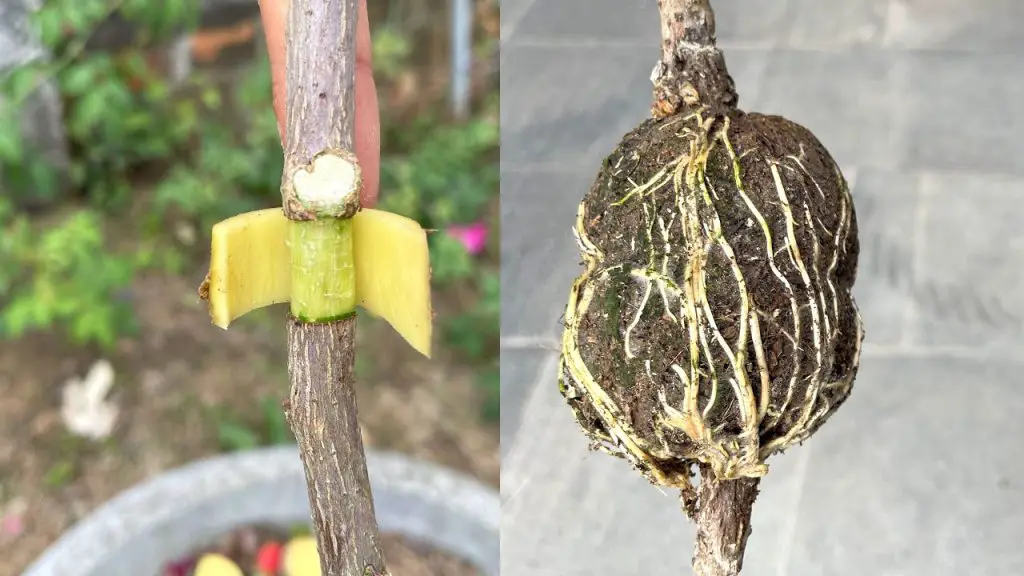
- After 2-4 weeks, you should begin to see root development. You can gently tug on the cutting to see if you feel resistance, which indicates the roots are forming.
- Once you see visible roots (and possibly some new growth on the top of the cutting), the cutting is ready to be transplanted into a larger pot or directly into the garden.
5. Transplanting Your Bougainvillea Cuttings
Once the cuttings have rooted and developed a healthy root system, it’s time to transplant them:
1. Move to Larger Pots or the Garden
- Carefully remove the cuttings from the potatoes and plant them in a larger pot with well-draining soil. Alternatively, you can transplant the rooted cuttings directly into your garden if the climate is warm enough.
- If transplanting to a garden, choose a sunny location with good drainage. Bougainvilleas thrive in full sun and need plenty of light for strong growth and blooming.
2. Continue Care
- Water the newly transplanted Bougainvillea lightly but consistently until the plant is established.
- Gradually acclimate the young plants to direct sunlight and outdoor conditions to avoid transplant shock.
6. Troubleshooting Common Issues
While rooting Bougainvillea cuttings with potatoes is generally straightforward, there are a few things to watch out for:
- Rotting Cuttings: If your cuttings start to rot, it could be due to overwatering or inadequate air circulation. Make sure the potato and soil aren’t too wet and that the cuttings are getting enough fresh air.
- No Root Development: If you don’t see roots forming, the environment may not be warm or humid enough. Ensure the temperature is between 70-75°F and that the cuttings are kept moist but not soggy.
- Pests: Watch out for common pests such as aphids or spider mites. If pests appear, treat with insecticidal soap or neem oil.
7. In Summary:
Growing Bougainvillea roots with potatoes is a fun and innovative method of propagating Lesser Bougainvillea cuttings. Potatoes provide moisture, nutrients, and a stable environment for the cuttings to develop roots. By following the steps outlined above, you can enjoy a new generation of beautiful, colorful Bougainvillea in your garden or on your balcony. It’s a simple, sustainable, and cost-effective way to propagate your favorite flowering vine!