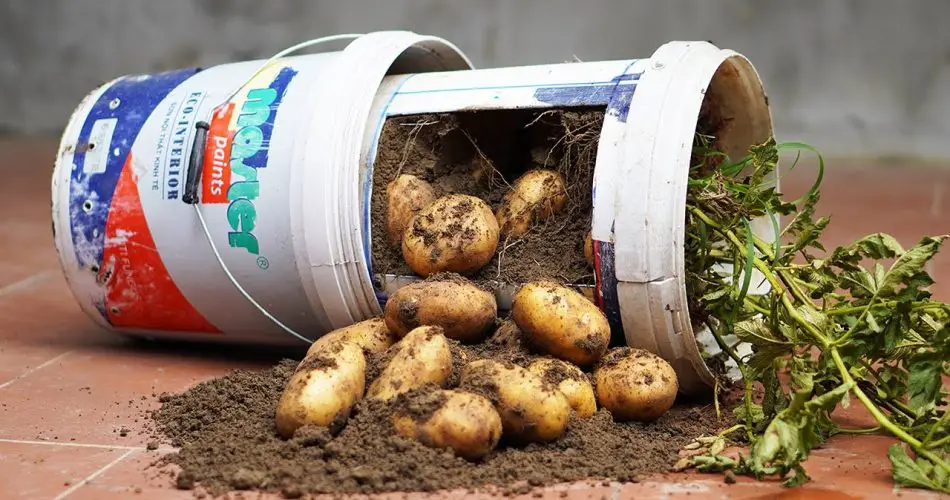
Growing potatoes in plastic containers is a space-saving, efficient, and highly productive method. It allows gardeners to control soil quality, reduce pests, and harvest more easily. Whether you have a small balcony or a backyard, this technique ensures a bountiful potato harvest with minimal effort!
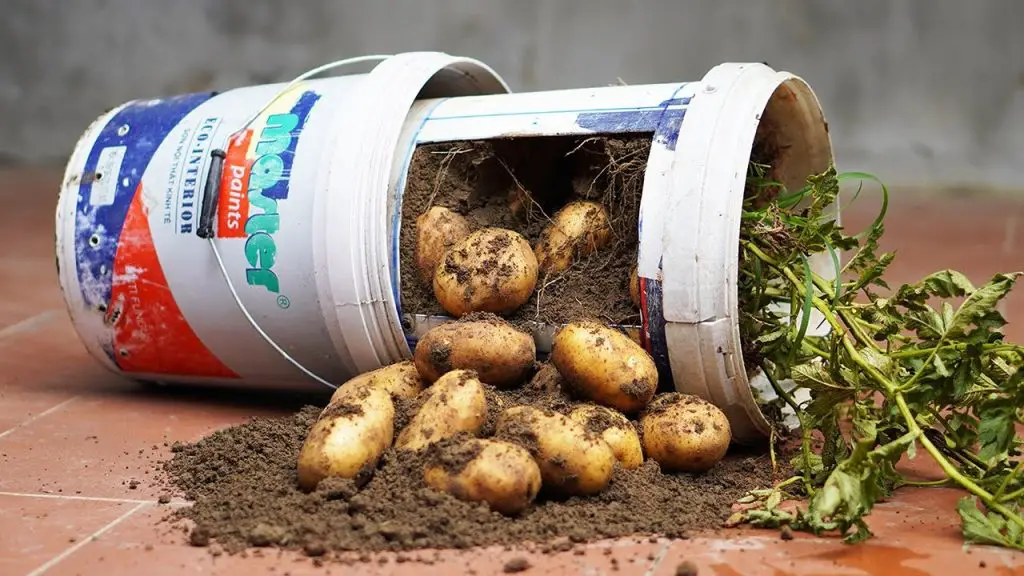
1. Choosing the Right Plastic Container
🛢️ Best containers for growing potatoes:
✅ Plastic buckets (5-10 gallons) – Provide deep space for root growth.
✅ Storage bins – Ideal for growing multiple plants.
✅ Grow bags (breathable plastic fabric) – Prevents overwatering and root rot.
💡 Tip: Drill several drainage holes at the bottom to prevent water buildup.
2. Preparing Nutrient-Rich Soil
🌱 Potatoes thrive in light, well-draining, and nutrient-rich soil.
✅ Best soil mix:
- Garden soil + compost + coconut coir for moisture retention.
- Add organic fertilizer (NPK 10-20-20) to promote root and tuber development.
- Mix in banana peels or eggshells for extra nutrients.
💡 Pro Tip: Use loose soil to encourage easy tuber expansion.
3. Choosing and Preparing Seed Potatoes
🥔 Best seed potatoes:
🔹 Certified disease-free seed potatoes from a garden store.
🔹 Avoid using supermarket potatoes (often treated to prevent sprouting).
✂️ Prepping seed potatoes:
- Cut large potatoes into 1-2 inch chunks, ensuring each piece has at least 1-2 eyes.
- Let the cut pieces dry for 24-48 hours before planting.
4. Planting Potatoes in Plastic Containers
🌱 Steps for planting:
1️⃣ Fill the container 1/3 full with prepared soil.
2️⃣ Place seed potatoes (cut side down, eyes facing up) 4-6 inches apart.
3️⃣ Cover with 2-3 inches of soil and water lightly.
💡 Tip: As plants grow, add more soil (hilling method) to encourage more tuber production.
5. Watering and Fertilizing for Maximum Growth
💧 Watering:
✅ Keep soil moist but not soggy—water 2-3 times a week.
✅ Avoid overhead watering to prevent fungal diseases.
🌿 Fertilizing:
- Use liquid fertilizer (NPK 5-10-10) every 2 weeks.
- Add compost tea or banana peel fertilizer for organic growth support.
6. Managing Pests and Diseases
🐛 Common threats:
🔸 Aphids, potato beetles, and fungal diseases.
🛡️ Protection tips:
✅ Spray neem oil solution to deter pests.
✅ Rotate container placement to prevent soil depletion.
✅ Use straw mulch to regulate moisture and keep pests away.
7. Harvesting Potatoes for the Best Yield
✔️ Potatoes are ready to harvest 90-120 days after planting.
✔️ Once leaves turn yellow and dry, stop watering for 1-2 weeks.
✔️ Gently dig through the soil to collect fully grown potatoes.
💡 Tip: Cure potatoes in a cool, dark place for 1-2 weeks to enhance flavor and shelf life!
Final Thoughts
Growing potatoes in plastic containers is an easy, cost-effective, and rewarding gardening method. With proper soil, watering, and care, you can enjoy a productive harvest of fresh, homegrown potatoes—even in small spaces! 🥔🌱✨
Happy Gardening! 🌿💚