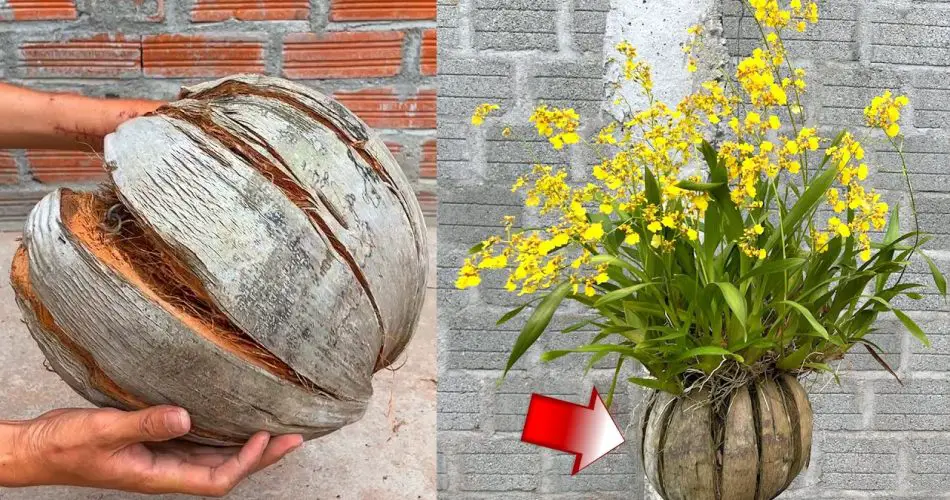
Orchids are exquisite plants that can thrive in unique and creative environments. One innovative way to pot your orchids is by using coconuts. Coconut-based pots not only offer a natural look but also provide excellent drainage and aeration. Here’s a comprehensive guide on how to create orchid flower pots with coconuts and the best practices for orchid care.
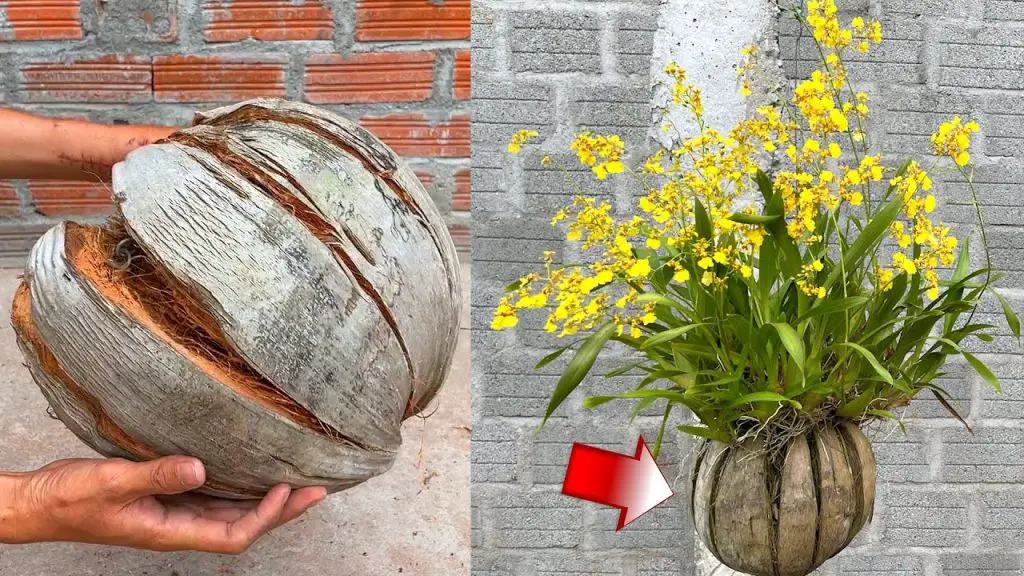
1. Why Use Coconuts for Orchid Pots?
Coconuts are a fantastic choice for orchid pots due to their natural durability and breathability. The fibrous husk of the coconut provides excellent drainage and aeration, which are crucial for healthy orchid roots.
2. Gather Your Materials
To make a coconut orchid pot, you’ll need the following materials:
- Mature coconuts (with husks)
- Drill or screwdriver
- Potting mix suitable for orchids (e.g., bark, sphagnum moss)
- Scissors or knife
- Water and fertilizer
3. Prepare the Coconut Shell
Start by drilling a few holes in the bottom of the coconut shell to ensure proper drainage. This is crucial to prevent waterlogging and root rot. Next, carefully cut open the top of the coconut to create an entry point for planting.
4. Create a Potting Mix
Orchids thrive in a well-draining potting mix. Combine bark, sphagnum moss, and perlite to create a mix that mimics their natural environment. The mix should be airy and not compacted.
5. Plant the Orchid
Place the orchid’s root system gently into the coconut shell. Fill the shell with the prepared potting mix, ensuring that the roots are well-covered but not buried too deeply. The mix should provide support without being overly dense.
6. Watering and Fertilizing
Orchids need consistent moisture but should not be overwatered. Water the orchid when the top of the potting mix feels dry. Use room-temperature water and ensure that excess water can drain out. Apply a diluted orchid fertilizer once a month during the growing season.
7. Positioning and Light
Place the coconut pot in a location with bright, indirect light. Orchids do well in areas with filtered sunlight. Avoid direct sunlight, which can cause leaf burn. Maintain a humid environment around the plant to replicate its natural habitat.
8. Monitor and Adjust
Keep an eye on the orchid’s growth and health. Look for signs of overwatering (e.g., yellowing leaves) or underwatering (e.g., wrinkled leaves). Adjust watering and feeding schedules as needed.
9. Repotting
Orchids generally need to be repotted every 1-2 years. When repotting, gently remove the orchid from the coconut pot, refresh the potting mix, and check the roots for any signs of rot or damage.
Conclusion
Making orchid flower pots with coconuts is an eco-friendly and aesthetically pleasing way to house your orchids. The natural properties of the coconut shell offer excellent drainage and support for your orchids’ roots. By following these steps and paying attention to your orchids’ specific needs, you can create a thriving environment for these beautiful plants. Enjoy the unique charm and health benefits of your coconut-potted orchids!