Rose propagation through cuttings is a rewarding method for growing new plants, but many gardeners are unaware of the best practices for success. Properly taking rose cuttings can significantly increase your chances of successful rooting and vigorous growth. Here’s a guide to some lesser-known tips and techniques to ensure your rose cuttings thrive.
Preparing for Rose Cuttings
- Choose the Right Time: The ideal time to take rose cuttings is during the late spring or early summer when the plant is actively growing. Avoid taking cuttings during extreme temperatures or when the plant is under stress.
- Select Healthy Parent Plants: Choose a vigorous and disease-free rose plant. The cuttings should come from stems that are young and flexible but have hardened off a bit. Avoid stems that are too old or too green.

Taking Rose Cuttings
- Use Sharp, Clean Tools: To prevent infection and ensure clean cuts, use a pair of sharp, sterilized pruners or scissors. Clean your tools with rubbing alcohol or a bleach solution before making cuts.
- Cut the Right Length: Take cuttings that are about 4-6 inches long. The cuttings should have at least 2-3 leaf nodes (the points on the stem where leaves are attached). Remove any flowers or buds to focus the plant’s energy on root development.
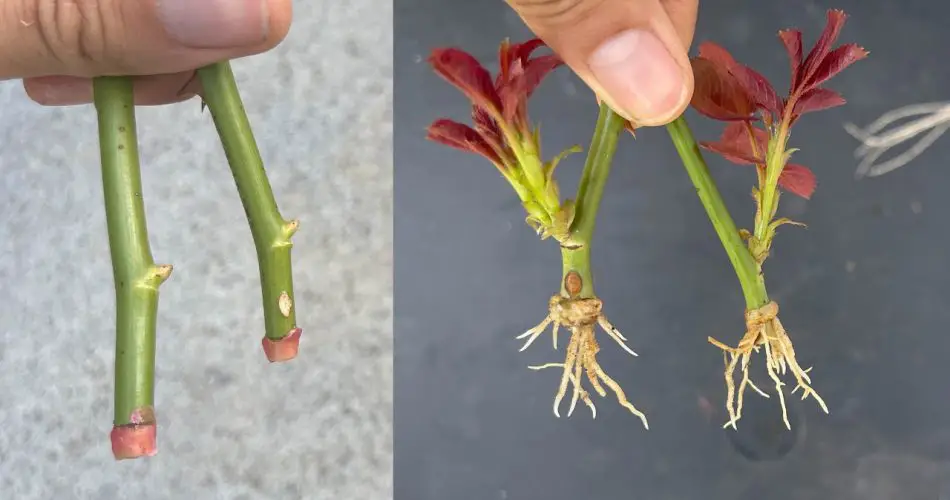
- Make the Cut Properly: Cut the stem just below a leaf node at a 45-degree angle. This increases the surface area for root formation and helps the cutting absorb water more efficiently.
Preparing Cuttings for Planting
- Remove Excess Leaves: Trim away the lower leaves, leaving just a few leaves at the top. This reduces water loss and focuses the cutting’s energy on rooting. Be careful not to remove too many leaves as they help in photosynthesis.
- Apply Rooting Hormone: Dip the cut end of the cutting in rooting hormone powder or gel. This encourages the development of roots and increases the likelihood of successful propagation. Gently tap off any excess powder to avoid clumping.
Planting Rose Cuttings
- Prepare the Potting Mix: Use a well-draining potting mix, such as a combination of perlite and peat moss, or sand and potting soil. The mix should be light and airy to promote root growth and prevent waterlogging.
- Plant the Cuttings: Insert the cut end of each cutting into the prepared potting mix, burying it about 1-2 inches deep. Space the cuttings about 2-3 inches apart to ensure they have enough room to develop roots without crowding.
- Water and Cover: Water the cuttings lightly to settle the soil around them. Cover the pot with a clear plastic bag or a plastic dome to create a humid environment that helps retain moisture and promotes rooting. Ensure the covering does not touch the cuttings.
Caring for Rose Cuttings
- Provide Indirect Light: Place the pot in a location with bright, indirect light. Direct sunlight can be too intense and may cause the cuttings to dry out.
- Maintain Humidity: Keep the soil consistently moist but not soggy. Monitor the humidity levels inside the cover and mist the cuttings if necessary to maintain a humid environment.
- Check for Roots: After 4-6 weeks, gently tug on the cuttings to see if they have developed roots. Once you feel resistance, it’s a sign that the roots have formed. At this stage, gradually acclimate the cuttings to outdoor conditions.
Transplanting Rose Cuttings
- Prepare for Transplanting: When the cuttings have developed a healthy root system, prepare to transplant them into individual pots or directly into the garden.
- Hardening Off: Before planting, harden off the new rose plants by gradually exposing them to outdoor conditions. Start with a few hours a day and increase the time over a week to acclimate them to the new environment.
- Planting: Plant the rooted cuttings in well-amended garden soil or larger pots, ensuring they receive adequate water and sunlight to establish themselves.
Taking rose cuttings can be a simple and effective way to propagate new plants, but success hinges on using the right techniques. By following these lesser-known tips and carefully managing the process, you can grow new roses with vibrant blooms and strong growth. Whether you’re expanding your rose garden or sharing the beauty of roses with others, these methods will help you achieve beautiful results.
Happy gardening! 🌹