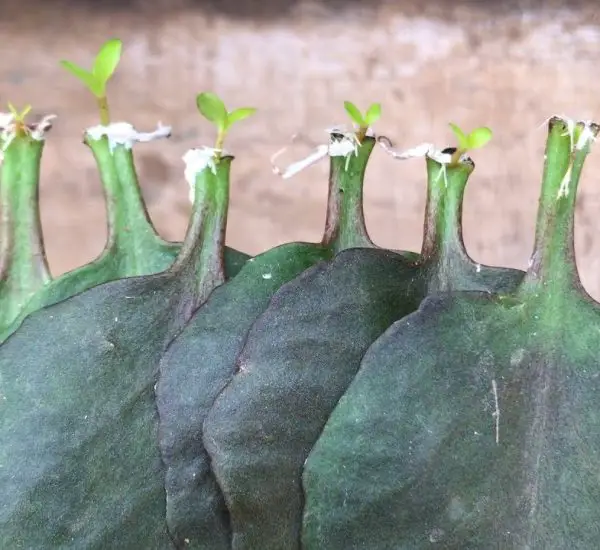
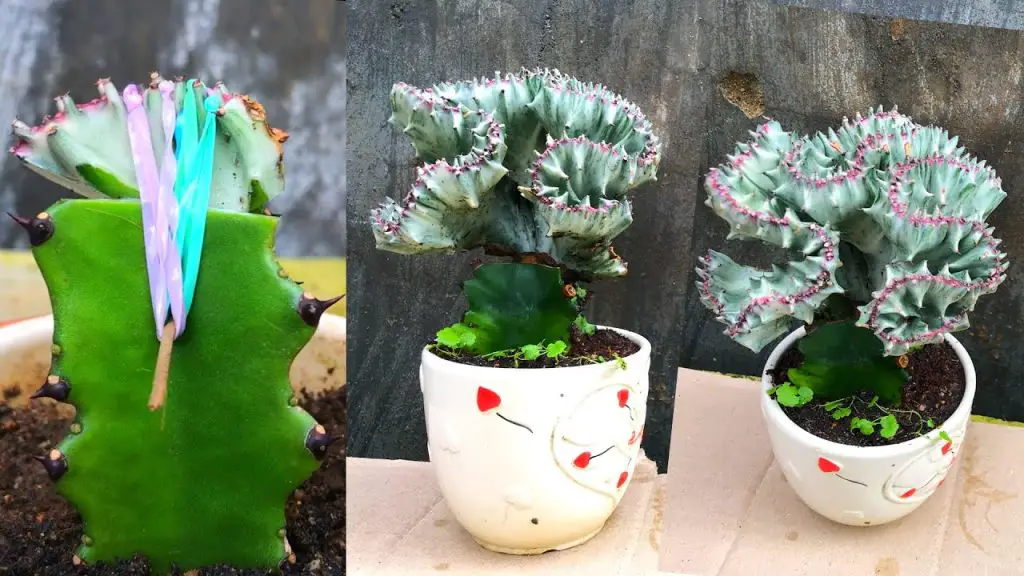
Transplanting a grafted Euphorbia Lactea Cristata (also known as the Coral Cactus) requires careful handling due to its unique structure and growth habits. Here’s a detailed guide on how to successfully transplant this intriguing cactus:
1. Prepare Your Materials
You will need:
- Grafted Euphorbia Lactea Cristata
- Well-draining cactus soil or potting mix
- Pot with drainage holes (preferably clay or terracotta)
- Gardening gloves
- Shovel or trowel
- Water for the soil
2. Choose the Right Time
The best time to transplant Euphorbia Lactea Cristata is during its active growing season, typically in spring or early summer. Avoid transplanting during the plant’s dormant period.
3. Prepare the New Pot
- Select a Pot: Choose a pot that is slightly larger than the current one. Ensure it has good drainage to prevent waterlogging.
- Add Soil: Fill the bottom of the pot with well-draining cactus soil. A mix of cactus soil and perlite or sand works well.
4. Remove the Cactus from Its Current Pot
- Wear Gloves: Always wear gardening gloves to protect your hands from the cactus’s spines and latex sap.
- Loosen the Soil: Gently tap the sides of the pot to loosen the soil around the cactus. Carefully ease the cactus out by gripping the base of the stem.
- Examine the Roots: Check the roots for any signs of damage or rot. Trim away any unhealthy or dead roots with clean, sharp scissors or pruning shears.
5. Transplant the Cactus
- Position the Cactus: Place the cactus in the center of the new pot. Make sure the grafted area (the crested part) is above the soil level to prevent rot.
- Add Soil: Fill in around the cactus with additional cactus soil, gently patting it down to eliminate air pockets. Ensure the plant is upright and stable.
- Water Lightly: Water the soil lightly to help settle it around the roots. Avoid soaking the soil, as Euphorbia Lactea prefers to dry out between waterings.
6. Provide Proper Care Post-Transplant
- Allow Time to Adjust: Place the pot in a location with bright, indirect light. Avoid direct sunlight immediately after transplanting to reduce stress on the plant.
- Monitor Watering: Wait about a week before watering again to allow the roots to acclimate and heal. Water sparingly, allowing the soil to dry out between waterings.
- Fertilize Lightly: Once the plant has settled in (after a few weeks), you can resume feeding with a diluted cactus fertilizer during the growing season.
7. Watch for Signs of Stress
Keep an eye on the cactus for any signs of stress, such as wilting, discoloration, or soft spots. These may indicate overwatering or other issues. Adjust care as needed to ensure the plant’s health.
By following these steps, you can successfully transplant your grafted Euphorbia Lactea Cristata, ensuring its continued growth and vibrancy in its new pot. Enjoy the unique beauty and structure of this fascinating cactus as it thrives in its updated home.