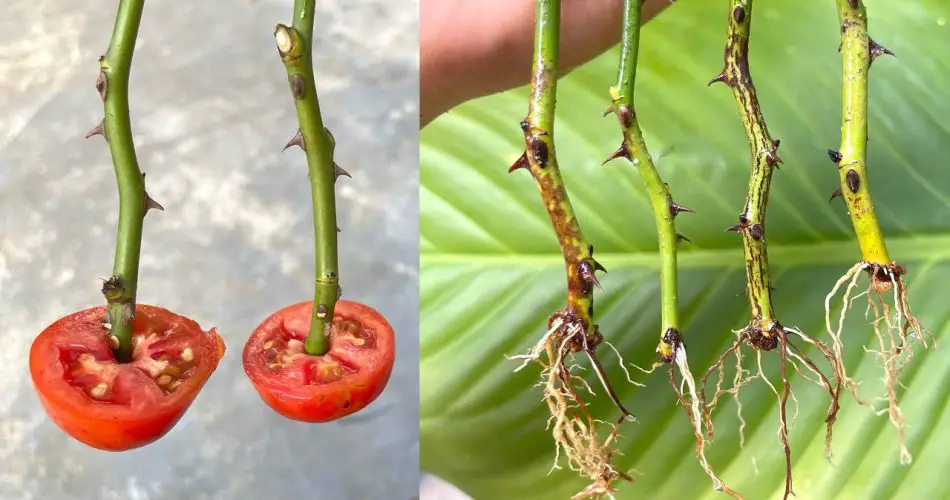
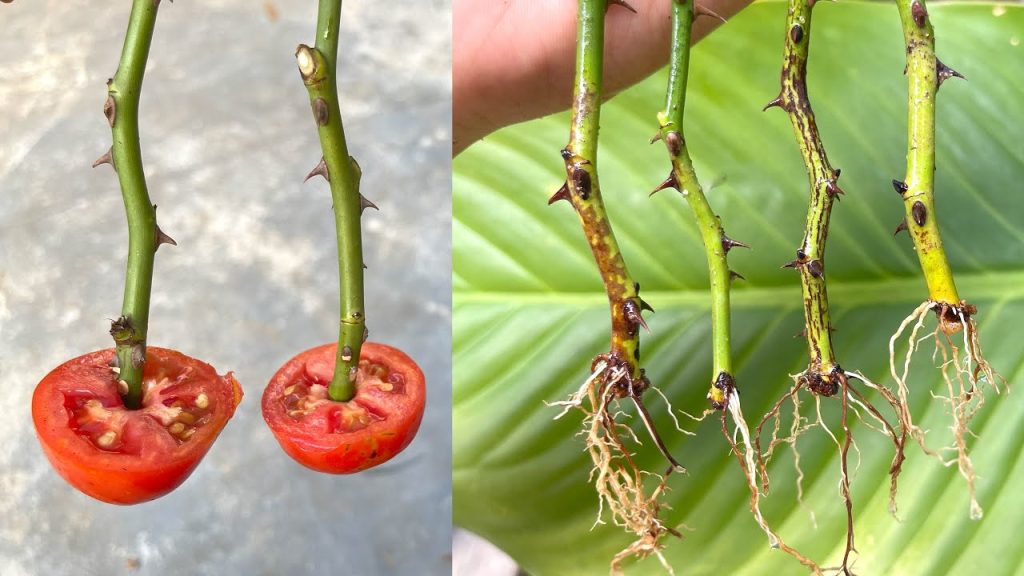
Did you know you can root rose branches using a tomato? This unusual yet effective method provides the perfect moisture and nutrients to help your rose cuttings develop strong roots naturally. Instead of relying on synthetic rooting hormones, a tomato can act as a natural growth booster for your plants!
Let’s explore this simple and fascinating technique to propagate roses using tomatoes.
Why Use a Tomato for Rooting Rose Branches? 🍅🌿
✅ Natural Moisture Provider – A tomato is filled with water and nutrients, preventing the cutting from drying out.
✅ Rich in Growth-Boosting Nutrients – It contains vitamins, minerals, and enzymes that help stimulate root development.
✅ Prevents Bacterial Infections – The tomato’s natural compounds help create a protective environment for the cutting.
✅ Chemical-Free and Eco-Friendly – A 100% organic alternative to commercial rooting hormones.
Step-by-Step Guide to Rooting Rose Branches Using a Tomato
1. Choosing and Preparing the Rose Cutting ✂🌹
🌿 Step 1: Select a Healthy Rose Stem
- Choose a strong, disease-free branch that is 6-8 inches long.
- Ensure it has at least 3-5 leaf nodes (the small bumps where leaves grow).
✂ Step 2: Make a Proper Cut
- Use sharp, sterilized pruning shears or a knife.
- Cut the stem at a 45-degree angle at the bottom to increase rooting surface area.
- Remove all flowers, buds, and excess leaves to help the plant focus on rooting.
2. Preparing the Tomato for Rooting 🍅
🔪 Step 1: Create a Hole in the Tomato
- Choose a ripe but firm tomato (not too soft or mushy).
- Use a small knife or a screwdriver to poke a hole in the tomato.
- The hole should be just large enough to hold the rose cutting securely.
3. Inserting the Rose Cutting into the Tomato 🌿
🌱 Step 1: Place the Cutting Inside
- Gently insert the bottom of the rose cutting into the hole in the tomato.
- Ensure it is deep enough to be surrounded by the tomato’s nutrient-rich flesh.
🌍 Step 2: Plant the Tomato with the Cutting
- Dig a small hole in nutrient-rich, well-draining soil (in a pot or directly in the garden).
- Bury the entire tomato in the soil, leaving only the rose cutting exposed above the ground.
4. Providing the Best Growing Conditions ☀️🌡️
☀️ Light: Place the plant in an area with bright, indirect sunlight to promote root growth.
💧 Watering: Keep the soil moist but not soggy to prevent rotting.
🌡️ Temperature: Maintain a warm environment between 65-75°F (18-24°C) for faster rooting.
🌿 Humidity: Cover the plant with a plastic bag or a small greenhouse to keep moisture levels high.
5. Monitoring and Transplanting the Rooted Rose Cutting 🌱✨
📅 Step 1: Wait for Root Development
- After 2-4 weeks, gently check for root growth by pulling the cutting slightly.
- If you feel resistance, the roots have started forming!
🌱 Step 2: Transplant to a Larger Pot or Garden
- Once the cutting has strong roots, carefully dig it up and plant it in a larger container or garden bed.
- Continue watering and caring for your new rose plant as it grows!
Final Thoughts: A Simple and Natural Way to Grow Roses! 🌹🍅
Using a tomato to root rose branches is a brilliant gardening trick that provides natural nutrients and moisture for successful propagation. This easy and eco-friendly method allows you to grow new roses effortlessly, all while using a common kitchen ingredient!
Give this amazing technique a try and enjoy watching your rose cuttings thrive into beautiful blooming plants! 🌿✨