Bougainvillea is a vibrant and eye-catching plant that adds a splash of color to gardens, patios, and balconies. Known for its bright bracts and vibrant blooms, Bougainvillea can be a bit tricky to propagate, but with the right methods, you can grow this stunning plant easily. One intriguing and effective method for propagating Bougainvillea is through water propagation. In this article, we will explore how to breed Bougainvillea in water and the best practices for growing a healthy Bougainvillea plant.

1. Why Breed Bougainvillea in Water?
Breeding Bougainvillea in water offers several advantages:
- Simple and cost-effective: Propagating Bougainvillea in water is a low-cost and easy method that doesn’t require special equipment or soil.
- Quick monitoring: When propagating in water, you can easily observe the root development. This makes it easier to track the plant’s progress and health.
- Root growth: Water propagation encourages strong, healthy roots, which are critical for the plant’s growth once it’s transferred to the soil.
This method is particularly ideal for beginners who want to experiment with growing Bougainvillea from cuttings without investing in complex growing techniques.
2. Choosing the Right Bougainvillea Variety for Water Propagation
Bougainvillea comes in various colors, including purple, red, pink, and white. When selecting a variety to propagate, consider the following:
- Healthy Plant: Choose a healthy and disease-free Bougainvillea. The health of the parent plant directly influences the success of propagation.
- Flowering Varieties: If you’re looking for specific flower colors, select a variety that matches the color you desire.
- Hardiness: Some varieties are better suited to certain climates, so ensure the variety you choose is appropriate for your region.
3. Materials You’ll Need to Propagate Bougainvillea in Water
Before you start, gather the necessary materials for water propagation:
- Healthy Bougainvillea Cutting: A 6-8 inch cutting with at least one or two nodes (the parts of the stem where leaves grow).
- Sharp Pruning Shears: For making a clean cut.
- Glass Jar or Vase: To hold the cutting in water.
- Water: Fresh, clean water that is free from contaminants.
- Rooting Hormone (optional): While not necessary, rooting hormone can help accelerate root growth.
4. Step-by-Step Guide to Breed Bougainvillea in Water
Step 1: Select and Prepare the Bougainvillea Cutting
- Choose a healthy stem from the parent Bougainvillea plant. Ideally, select a semi-hardwood cutting—this is a slightly mature stem, not too soft or too woody.
- Cut the stem just below a node using sharp pruning shears. The cutting should be about 6-8 inches long.
- Remove any leaves from the bottom half of the cutting to avoid them being submerged in water. Leave the leaves at the top of the cutting intact.
Step 2: Optional – Apply Rooting Hormone
- If desired, dip the cut end of the Bougainvillea cutting into rooting hormone. This can help encourage faster root development, but it’s not a necessity. Some gardeners prefer to propagate Bougainvillea without it, and it can still root successfully.
Step 3: Place the Cutting in Water
- Place the cutting in a glass jar or vase filled with clean water. Ensure that the cut end of the stem is submerged, but the leaves are kept above the water line.
- Put the container in a bright location with indirect sunlight. Avoid direct sun exposure as it can harm the cutting and prevent root development.
Step 4: Change the Water Regularly
- To promote healthy root growth, change the water every 2-3 days. Stagnant water can lead to the growth of harmful bacteria that may affect the cutting.
- Keep an eye on the cutting to ensure it is still in contact with water, as evaporation can cause the water level to drop.
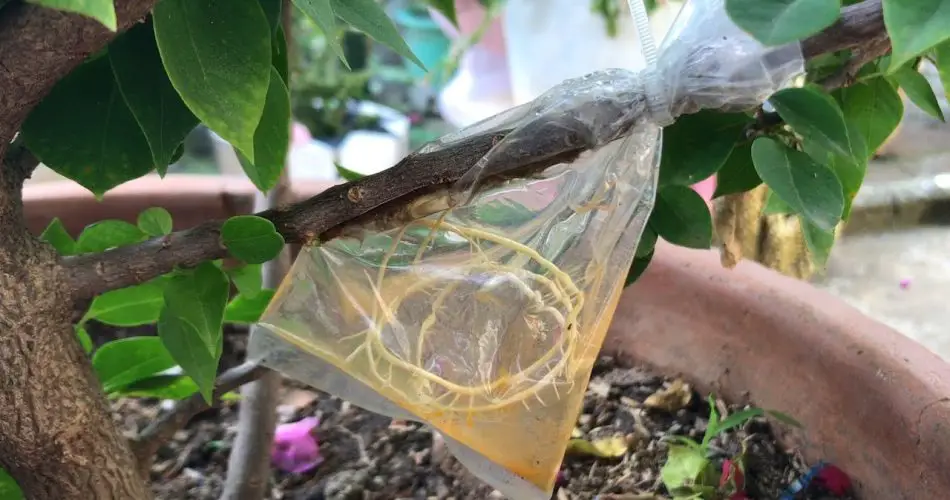
Step 5: Wait for Roots to Develop
- Rooting process: After a couple of weeks, you should begin to see roots developing from the bottom of the cutting. The roots will start small but should grow longer as time passes.
- Be patient, as root growth can take anywhere from 2 to 4 weeks. Once the roots are 2-3 inches long, the cutting is ready to be planted in soil.
5. Transplanting the Bougainvillea Cutting into Soil
After your Bougainvillea cutting has established strong roots in water, it’s time to transfer it to a pot with soil.
Step 1: Prepare the Pot
- Choose a well-draining pot with drainage holes to prevent water from accumulating at the bottom.
- Fill the pot with potting mix that is light and well-draining. You can also use a cactus or succulent mix for Bougainvillea, as it prefers dry conditions.
Step 2: Transplant the Cutting
- Gently remove the cutting from the water and place it into the prepared pot.
- Plant the cutting so that the roots are well-covered with soil, and gently press the soil around the base to secure it.
Step 3: Water and Care
- Water the newly transplanted Bougainvillea lightly to settle the soil around the roots.
- Place the pot in a bright location with plenty of indirect sunlight to help the plant adjust to its new environment.
- Monitor the plant for any signs of stress or disease. Bougainvillea thrives in warm temperatures and needs to be in a well-lit area to encourage healthy growth.
6. Tips for Growing a Healthy Bougainvillea
- Sunlight: Bougainvillea loves the sun! Ensure it gets at least 5-6 hours of sunlight per day for optimal growth and flowering.
- Watering: Once the plant is established, water sparingly. Bougainvillea prefers dry conditions and doesn’t tolerate overwatering.
- Pruning: Regularly prune your Bougainvillea to encourage new growth and to keep the plant compact and bushy.
- Fertilizing: Feed Bougainvillea with a balanced fertilizer during the growing season to encourage strong blooms.
7. Conclusion
Breeding Bougainvillea in water is a simple and effective way to propagate this stunning plant and add a touch of vibrancy to your garden or home. By following the right steps, you can successfully grow Bougainvillea from cuttings in water, and once rooted, transplant it into a pot for continued growth. This technique is perfect for beginners and experienced gardeners alike, and with a bit of patience and care, you’ll soon enjoy the beauty of a blooming Bougainvillea in your own space.