Are you curious about innovative methods of tree propagation? Recently, an experiment involving the propagation of trees using just leaves yielded some surprising and unexpected results. This method, often considered unconventional, has shown fascinating outcomes that might inspire you to try it for yourself.
The Experiment: Propagating with Leaves
Propagation is a common technique used to grow new trees or plants from existing ones. Traditionally, this involves using cuttings or seeds. However, the experiment in question involved using only leaves from a mature tree to see if they could develop into new trees.
Materials Used
- Healthy Tree Leaves: Fresh and vibrant leaves from a healthy tree.
- Potting Medium: A well-draining potting mix or soil.
- Containers: Small pots or trays for planting.
- Water: For keeping the medium moist.
The Process
- Selecting Leaves:
- Choose healthy, mature leaves that are free from disease or damage. The leaves should be fresh and ideally taken from the middle of the tree’s canopy.
- Preparing the Medium:
- Fill your containers with a well-draining potting mix. Ensure the medium is moist but not waterlogged.
- Planting the Leaves:
- Place the leaves flat on the surface of the soil or gently press them into the soil. In some methods, leaves are cut into sections with a vein or midrib to enhance the chances of propagation.
- Maintaining Moisture:
- Keep the potting medium consistently moist. Cover the containers with a plastic dome or plastic wrap to create a humid environment that encourages root formation.
- Observation:
- Place the containers in a bright, indirect light location and observe the progress over several weeks.
Unexpected Results
The results of this leaf propagation experiment were both surprising and intriguing:
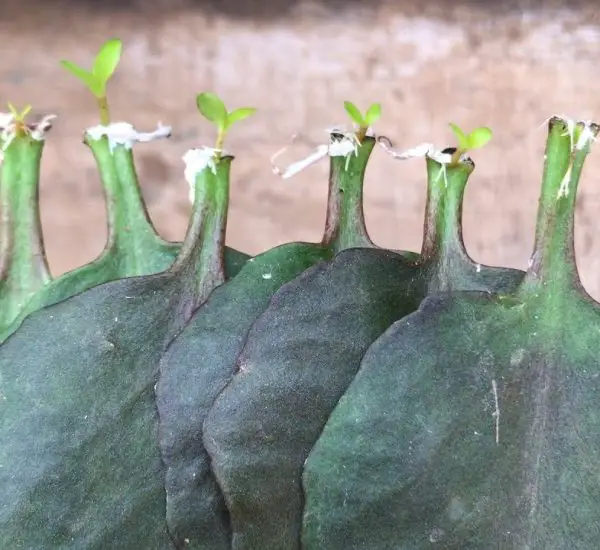
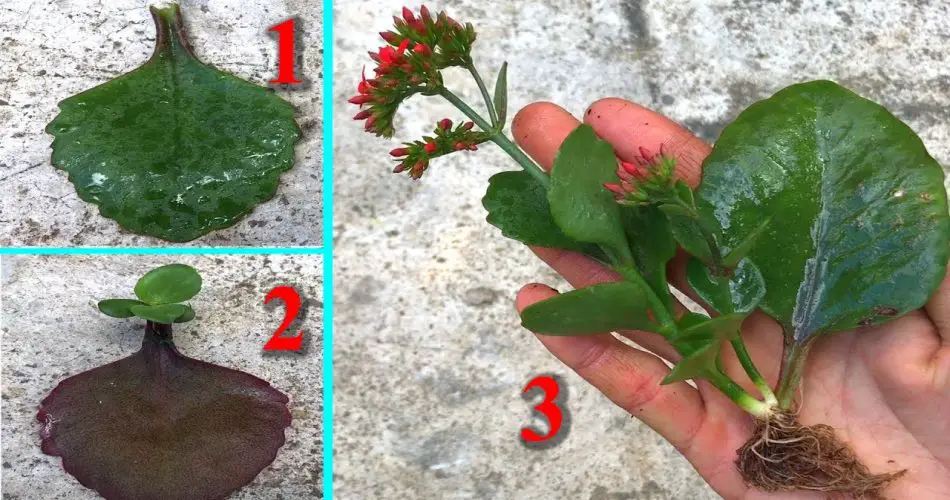
- Root Formation: In some cases, the leaves began to produce roots from their veins or edges, contrary to the typical expectation that only cuttings or seeds would root.
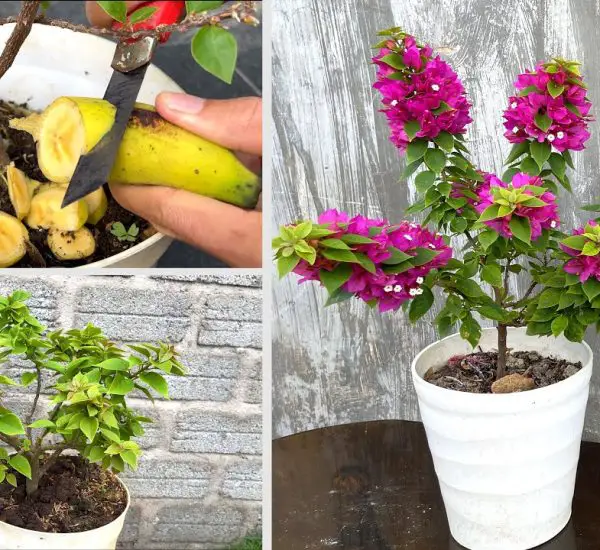
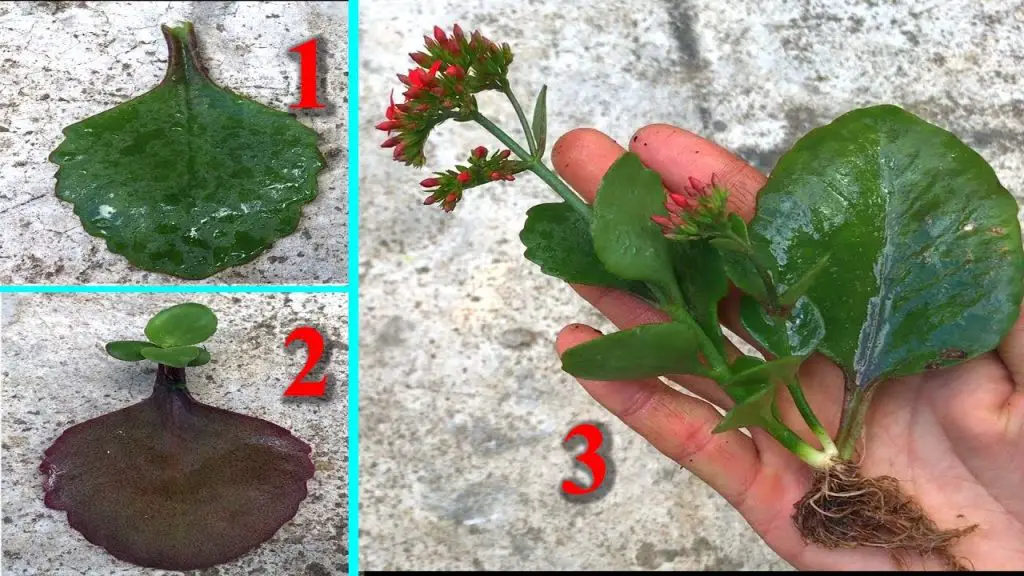
- New Shoots: Surprisingly, new shoots and small plants started to emerge from the leaves. This indicates that the leaves not only rooted but also began developing into new plants.
- Variable Success Rates: While some leaves developed into full-fledged saplings, others did not survive or root effectively. The success rate varied depending on the type of tree and the leaf condition.
Implications and Applications
- Innovative Propagation: This method opens up new possibilities for tree propagation, especially for species that are difficult to propagate by conventional means.
- Educational Tool: The experiment serves as an educational tool for understanding plant biology and propagation techniques.
- Research Opportunities: Further research can help understand why some leaves are more successful at propagating than others and how this technique can be optimized.
Propagating trees using just leaves has proven to be an exciting and innovative approach with some surprising results. While not all leaves will necessarily develop into new trees, the experiment highlights the potential for unconventional propagation methods. If you’re interested in exploring new propagation techniques, this leaf-based method might be worth a try. Who knows? You might just uncover the next big breakthrough in plant propagation!