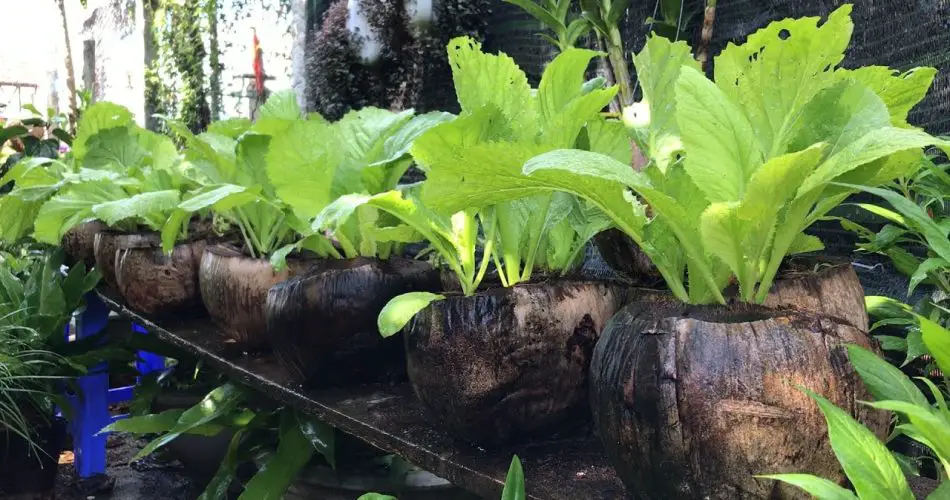
Have you ever considered using coconut shells as planters for your vegetables? This innovative and eco-friendly method allows you to recycle waste while growing fresh, leafy vegetables right at home. Here’s how you can transform coconut peels into productive growing containers for your garden!
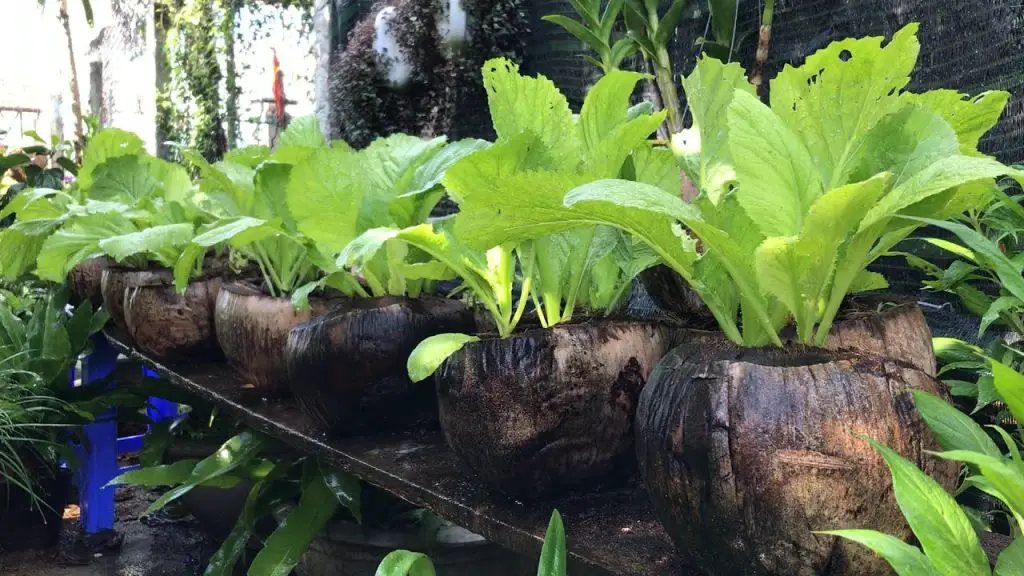
Why Use Coconut Shells?
Coconut shells are a fantastic choice for growing vegetables for several reasons:
- Eco-Friendly: Using coconut shells helps reduce waste and promotes sustainable gardening practices.
- Natural Properties: Coconut fibers provide excellent drainage and aeration for plant roots, preventing overwatering and promoting healthy growth.
- Aesthetic Appeal: Coconut shells add a unique and rustic look to your garden or balcony, making it visually appealing.
Step-by-Step Guide to Growing Vegetables in Coconut Shells
1. Collect and Prepare Coconut Shells
- Start by collecting husked coconut shells. You can buy coconuts or use those left over from cooking or snacks.
- Clean the shells thoroughly to remove any residue and allow them to dry.
2. Create Drainage Holes
- Using a drill or a sharp tool, carefully create drainage holes at the bottom of each coconut shell. Proper drainage is crucial to avoid waterlogging.
3. Fill with Growing Medium
- Fill each coconut shell with a nutrient-rich potting mix or a blend of coco coir and compost. This mixture will provide the necessary nutrients for your vegetables.
- Leave some space at the top to prevent the soil from spilling out during watering.
4. Choose Your Vegetables
- Select leafy vegetables that grow well in small spaces, such as:
- Lettuce
- Spinach
- Basil
- Kale
- Herbs like cilantro or parsley
5. Plant Seeds or Seedlings
- Plant seeds or seedlings in the prepared coconut shells according to their specific planting depth. Water gently after planting to moisten the soil.
6. Provide Proper Care
- Place your coconut shell planters in a location that receives plenty of sunlight—most leafy vegetables thrive in full sun or partial shade.
- Water regularly, ensuring the soil stays moist but not soggy. The natural fibers of the coconut shell will help retain moisture.
- Fertilize with a balanced organic fertilizer every few weeks to provide essential nutrients.
7. Harvest and Enjoy
- As your vegetables grow, monitor their progress and harvest when they reach the desired size. Enjoy the satisfaction of eating fresh, home-grown produce!
Conclusion
Growing vegetables in coconut peels is a sustainable and rewarding gardening method. By recycling coconut shells, you can create a unique growing environment for leafy vegetables while contributing to eco-friendly practices. Not only will you enjoy the fresh flavors of home-grown produce, but you will also add a touch of creativity and sustainability to your gardening routine. Start collecting those coconut shells today and watch your vegetable garden flourish!