Grafting is a technique that allows you to combine the strengths of different plants, and when it comes to papaya trees, this method can significantly enhance your plantation’s productivity. If you’re looking to increase the fruit yield of your female papaya trees by integrating a male papaya tree, this guide will walk you through the process.
Why Graft Male and Female Papaya Trees?
- Pollination Efficiency: Female papaya trees produce fruit only when pollinated by male trees. By grafting a male onto a female, you ensure that pollination occurs effectively.
- Improved Yield: A well-pollinated female tree can produce more fruit, leading to a better harvest.
- Space Optimization: Grafting allows you to utilize space efficiently, reducing the need for multiple trees in your plantation.
Step-by-Step Guide to Grafting Male Papaya Trees into Female Papaya Trees
1. Select the Right Trees
- Choose Healthy Specimens: Ensure both the male and female papaya trees are healthy and disease-free.
- Optimal Age: The trees should be at least 6 months old for successful grafting.
2. Gather Your Tools
- Sharp Knife: Use a clean, sharp knife for making precise cuts.
- Grafting Tape or Wax: This will help secure the graft and protect it from pests.
- Pruning Shears: For trimming any excess growth.
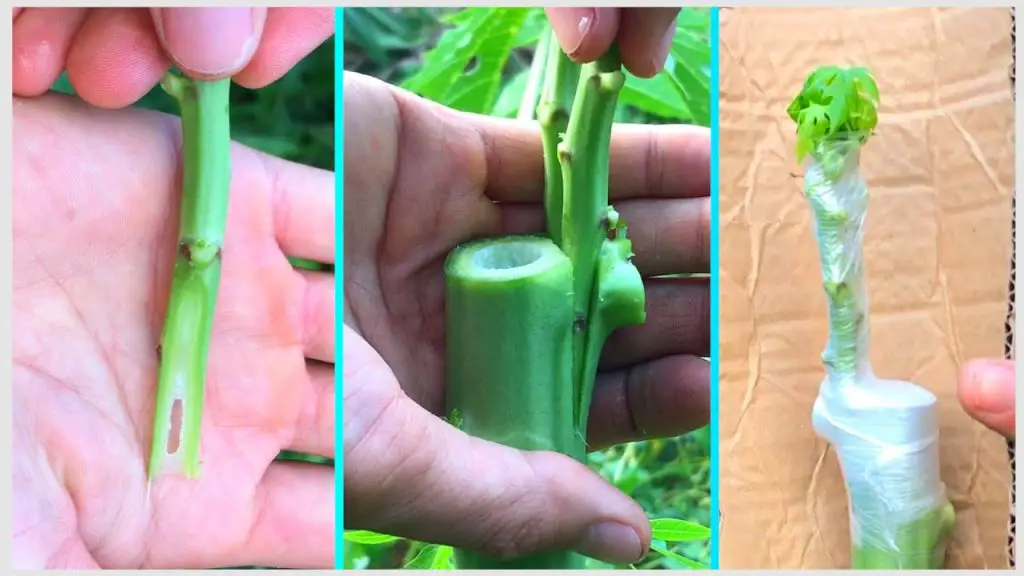
3. Prepare the Male Tree
- Select a Healthy Male Shoot: Look for a young, vigorous shoot from the male tree, about 6-8 inches long.
- Make a Clean Cut: Cut the shoot just below a node, ensuring the cut is smooth.
4. Prepare the Female Tree
- Choose a Suitable Spot: Select a location on the female tree where you want to graft the male shoot.
- Make a V-Cut: Create a V-shaped cut about 1-2 inches deep in the bark of the female tree. This will help in merging the tissues of both plants.
5. Insert the Male Shoot
- Fit the Male Cutting: Place the male shoot into the V-cut of the female tree, aligning the cambium layers (the green part just under the bark).
- Secure the Graft: Use grafting tape or wax to bind the graft site tightly, ensuring it stays in place.
6. Care for the Grafted Area
- Watering: Water the tree adequately but avoid waterlogging. The graft site should remain moist but not overly wet.
- Protection: Keep an eye on the graft site for signs of pests or diseases.
7. Monitor Growth
- Check for Success: After a few weeks, check if the male shoot is integrating well with the female tree. You should see new growth emerging from the graft.
- Remove Tape: Once the graft is established, you can gently remove the grafting tape.
Tips for Successful Grafting
- Timing: The best time to graft is during the growing season, ideally in spring or early summer.
- Temperature: Grafting should be done when temperatures are mild, as extreme heat or cold can hinder success.
- Patience: Not all grafts take; don’t be discouraged if your first attempt doesn’t succeed. Practice makes perfect!
Conclusion
Grafting male papaya trees into female trees is an effective way to enhance your papaya plantation’s yield and ensure successful pollination. By following these steps and providing proper care, you can maximize your harvest and enjoy the fruits of your labor. Happy grafting!
Copy
Show Comments