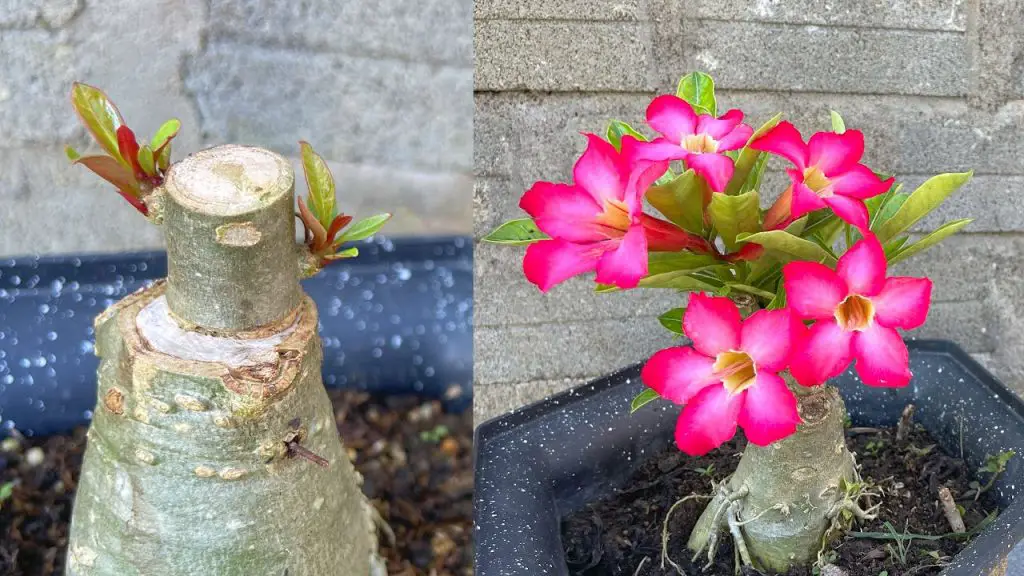
Thai porcelain flowers, also known as Plumeria, are admired for their stunning, fragrant blooms and vibrant colors. These flowers, often associated with tropical climates, are a popular choice in gardens and indoor spaces alike. Grafting is a technique that allows gardeners to propagate and enhance the beauty of these flowers, ensuring the creation of healthy, beautiful plants. One method that has gained popularity is the Adenium Bonsai Method—a technique that involves grafting Thai porcelain flowers with stems to produce unique, compact, and visually striking bonsai-style plants.
What is Grafting?
Grafting is a horticultural technique where parts of two plants are joined together to grow as one. Typically, a scion (a piece of the desired plant) is attached to the rootstock (the plant that provides the root system). The two plants will eventually grow together, sharing nutrients and producing a single, healthy plant with desirable characteristics.
For Thai porcelain flowers, grafting onto a strong Adenium rootstock can offer several advantages. Adenium, known for its hardy nature and adaptability, provides a robust root system that helps support the delicate beauty of Thai porcelain flowers. This method can lead to stunning, long-lasting blooms with a unique, bonsai-style shape.
The Adenium Bonsai Method for Grafting Thai Porcelain Flowers
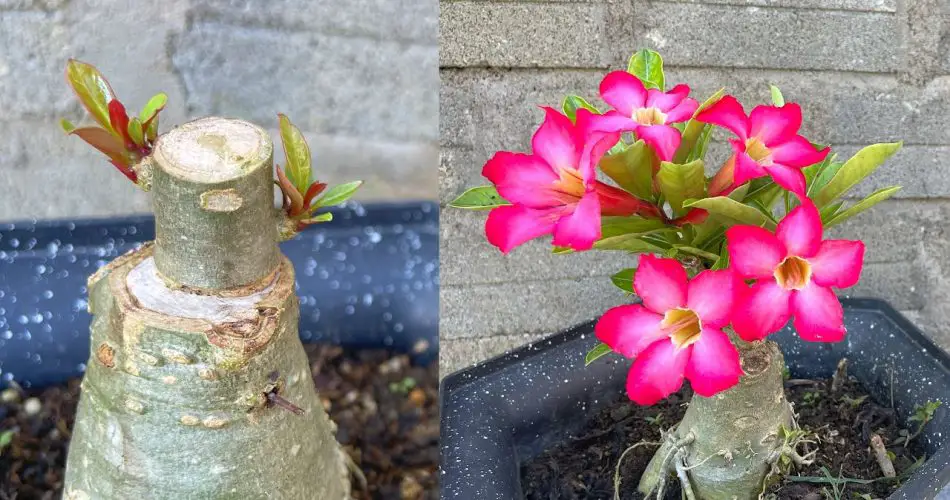
The Adenium Bonsai Method involves grafting a Plumeria scion (a stem or cutting of the Thai porcelain flower) onto the Adenium rootstock to create a hardy, miniature tree. This technique allows for the creation of bonsai-like plants that retain the large, fragrant blooms of the Thai porcelain flower while benefiting from the resilience of Adenium.
Step 1: Select Your Plants
To begin the grafting process, you’ll need to choose a healthy Thai porcelain flower cutting (Plumeria) and a strong Adenium plant. The Adenium plant will act as the rootstock, and the Thai porcelain flower cutting will serve as the scion.
- Thai porcelain flower cutting: Choose a stem from a mature plant that has at least one node (a bump where leaves or roots may grow).
- Adenium rootstock: Select a healthy Adenium plant with a strong, established root system.
Step 2: Prepare the Scion and Rootstock
Once you have selected your plants, it’s time to prepare them for grafting.
- Prepare the scion: Cut the Thai porcelain flower stem at a 45-degree angle, ensuring it is clean and free from any damage. The cutting should be approximately 4-6 inches long, with at least one node for growth.
- Prepare the rootstock: Make a matching incision on the Adenium stem, cutting it at a slight angle to create a surface that will easily connect with the scion. The incision should be deep enough to expose the vascular tissue of the rootstock.
Step 3: Graft the Scion onto the Rootstock
Now it’s time to join the two plant parts together:
- Align the scion and rootstock so that their vascular tissues are in direct contact. This connection is crucial for the graft to take successfully.
- Secure the graft: Use grafting tape or a similar material to gently hold the scion and rootstock together. Ensure that the grafted parts are tightly bound but not so tight that they’re crushed.
Step 4: Care for the Grafted Plant
After grafting, it’s important to provide the right conditions to encourage healing and growth.
- Humidity: Place the grafted plant in a humid environment to reduce the chances of dehydration. You can cover the plant with a plastic bag or a humidity dome to retain moisture.
- Temperature: Keep the grafted plant in a warm area with temperatures between 75-85°F (24-29°C), as this will promote healthy grafting.
- Watering: Water the grafted plant lightly, ensuring the soil is moist but not waterlogged. Overwatering can lead to rot.
- Light: Ensure the grafted plant receives indirect sunlight for several weeks, avoiding direct sunlight until the graft has healed properly.
Step 5: Monitor Growth and Unwrap the Graft
After several weeks, the graft should begin to heal. You’ll notice the scion and rootstock starting to fuse together as the plant grows. Once you see that the graft has successfully taken, you can gradually remove the grafting tape and allow the plant to grow normally.
Benefits of Grafting Thai Porcelain Flowers with the Adenium Bonsai Method
- Enhanced Hardiness: By grafting onto an Adenium rootstock, the Thai porcelain flower benefits from the Adenium’s strong root system, making it more resilient to environmental stresses such as heat and drought.
- Compact Growth: The Adenium Bonsai Method encourages the development of a bonsai-style plant that’s smaller and more manageable while still producing the stunning blooms of the Thai porcelain flower.
- Faster Growth and Flowering: Grafting can speed up the growth process, leading to quicker blooming compared to growing from seeds or cuttings.
- Unique Aesthetic: The grafted plant will take on a unique bonsai shape, offering a visually striking addition to your garden or indoor space.
Conclusion
Grafting Thai porcelain flowers with the Adenium Bonsai Method is an exciting way to create unique, hardy plants with stunning flowers. By using a strong Adenium rootstock, gardeners can enjoy the beauty of Thai porcelain flowers in a more compact and resilient form. Whether you’re an experienced bonsai enthusiast or simply love these beautiful flowers, this grafting method provides a rewarding way to cultivate your own bonsai-style Thai porcelain flower plant.