Growing hydrangeas can be a beautiful addition to any flower garden. These stunning, colorful blooms are known for their ability to thrive in various environments. But what if you could boost your hydrangea’s growth and health using potatoes? Believe it or not, potatoes can serve as an amazing natural medium for hydrangea cuttings. Here’s how to grow hydrangeas using potatoes, along with some expert tips on taking care of your flower garden.
Why Potatoes for Growing Hydrangeas?
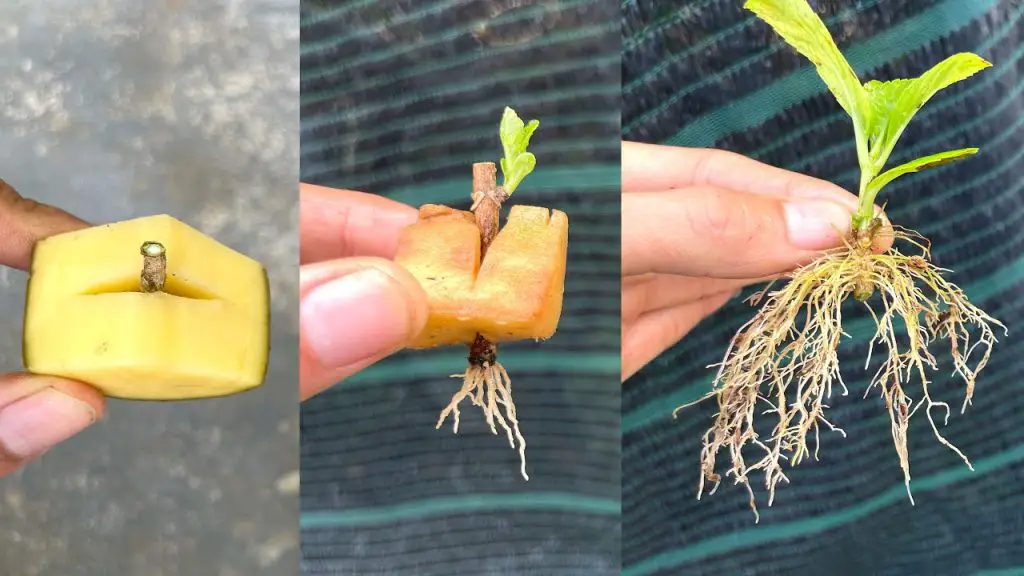
Potatoes are an unusual but highly effective way to help hydrangea cuttings establish roots. The starch in potatoes provides nutrients and moisture, creating the perfect environment for root development. Additionally, potatoes help keep the cuttings hydrated during the rooting process, which is crucial for their survival.
How to Grow Hydrangeas with Potatoes
Here’s a step-by-step guide on using potatoes to propagate your hydrangeas and give them the best possible start:
Step 1: Select Healthy Hydrangea Cuttings
- Choose a healthy hydrangea plant for cuttings. Opt for a non-flowering stem that’s about 4-6 inches long.
- Ensure the cutting has at least two leaf nodes (the parts where leaves grow) as these are where the roots will develop.
Step 2: Prepare the Potato
- Choose a firm, healthy potato. Look for one that has no signs of rot or damage.
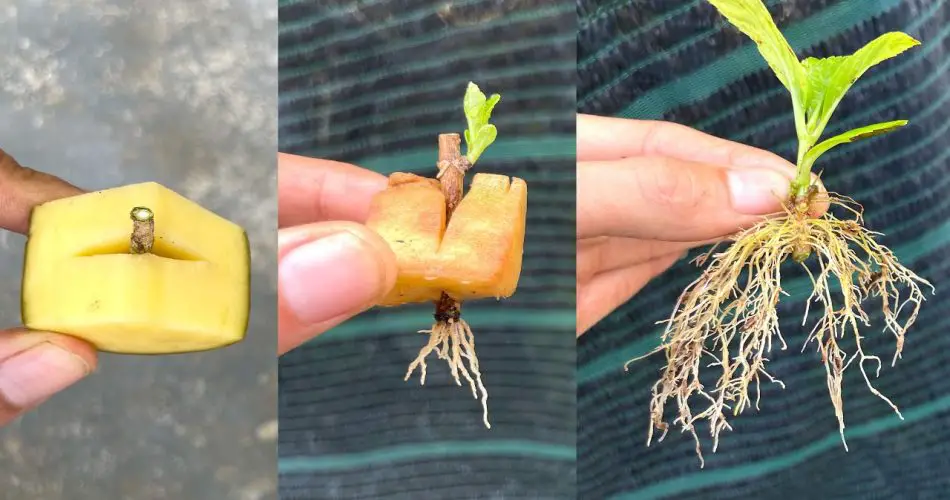
- Cut the potato into slices that are thick enough to hold the cutting upright. The potato will act as the base and provide moisture to the cutting.
Step 3: Insert the Hydrangea Cutting into the Potato
- Using a knife, create a small hole in the center of the potato slice, just big enough to accommodate the base of the hydrangea cutting.
- Insert the cutting into the potato, making sure the cut end is securely placed in the potato, and the leaf nodes are facing upward.
Step 4: Plant in Soil
- Once the cutting is securely placed in the potato, plant the potato and cutting into a pot filled with well-draining soil. The potato should be buried under the soil, leaving just the cutting exposed.
- Water the pot thoroughly but avoid overwatering. Ensure the soil stays moist but not soggy.
Step 5: Provide Optimal Growing Conditions
- Place the pot in a warm, sunny location. Hydrangeas prefer bright but indirect light, so try to find a place that offers this balance.
- Maintain humidity around the cutting by covering the pot with a plastic bag or using a small greenhouse dome. This will help the cutting stay hydrated and encourage faster root growth.
Step 6: Wait for Root Development
- Within a few weeks, the hydrangea cutting will begin to develop roots. You can check this by gently tugging on the cutting. If there’s resistance, it means the roots are starting to form.
- Once roots are well established, you can transplant the hydrangea cutting into its permanent location in your garden.
Tips for Taking Care of Your Flower Garden
After successfully growing your hydrangeas using potatoes, it’s essential to provide the right care for them to thrive. Here are some tips for taking care of your flower garden:
1. Proper Watering
Hydrangeas love moisture, so keep the soil consistently moist but not waterlogged. Overwatering can cause root rot, so always ensure proper drainage in your pots or garden beds.
2. Fertilizing Hydrangeas
Fertilize your hydrangeas with a balanced, slow-release fertilizer in the spring. Hydrangeas also benefit from organic compost to provide nutrients and improve soil structure.
3. Pruning and Deadheading
Prune dead or damaged stems regularly to promote healthy growth and vibrant blooms. You can also deadhead spent flowers to encourage new buds. However, be mindful of when you prune, as some hydrangeas bloom on old wood.
4. Mulching
Mulch around the base of the plant to help retain moisture and keep the roots cool. Mulch also prevents weeds from competing for nutrients.
5. Choosing the Right Location
Hydrangeas generally prefer partial shade with some direct sunlight. Avoid planting them in areas with too much heat or full sun, as this can cause their leaves to burn.
Conclusion
Growing hydrangeas with the help of potatoes is an easy and effective way to propagate these beautiful flowers in your garden. The potato acts as a nutrient reservoir, giving your hydrangea cuttings the perfect start. With a little patience and proper care, you’ll soon have hydrangeas thriving in your garden. Pair this technique with general gardening tips, and you’ll be on your way to a beautiful, flourishing flower garden! 🌸🌱
Happy gardening!