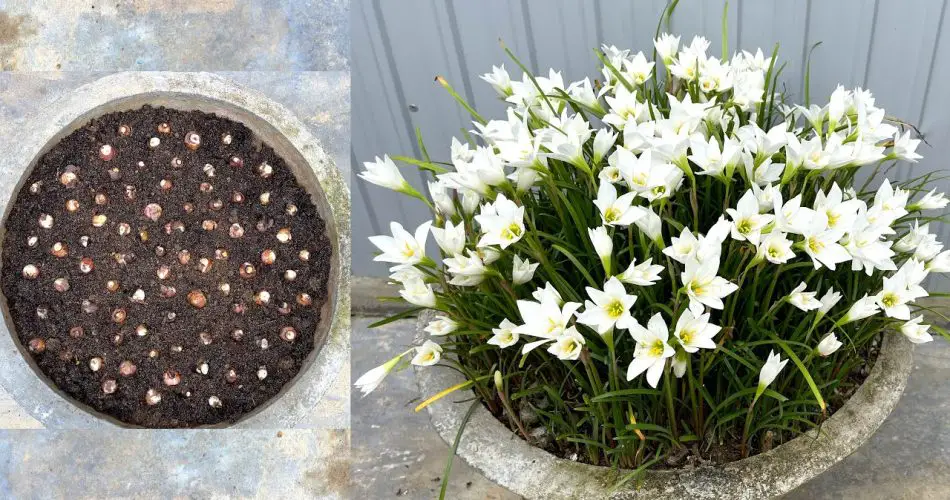
Rain lilies (also known as Zephyranthes), particularly the white rain lily variety, are a beautiful and low-maintenance addition to any garden. These stunning, funnel-shaped flowers bloom after rain, creating a dazzling display of pure white petals that brighten up any landscape. Growing white rain lilies from bulbs is an easy and rewarding process that requires minimal care. In this article, we’ll guide you through the steps to successfully grow white rain lilies in your garden, from selecting bulbs to ensuring they thrive in your outdoor space.
1. What Are White Rain Lilies?
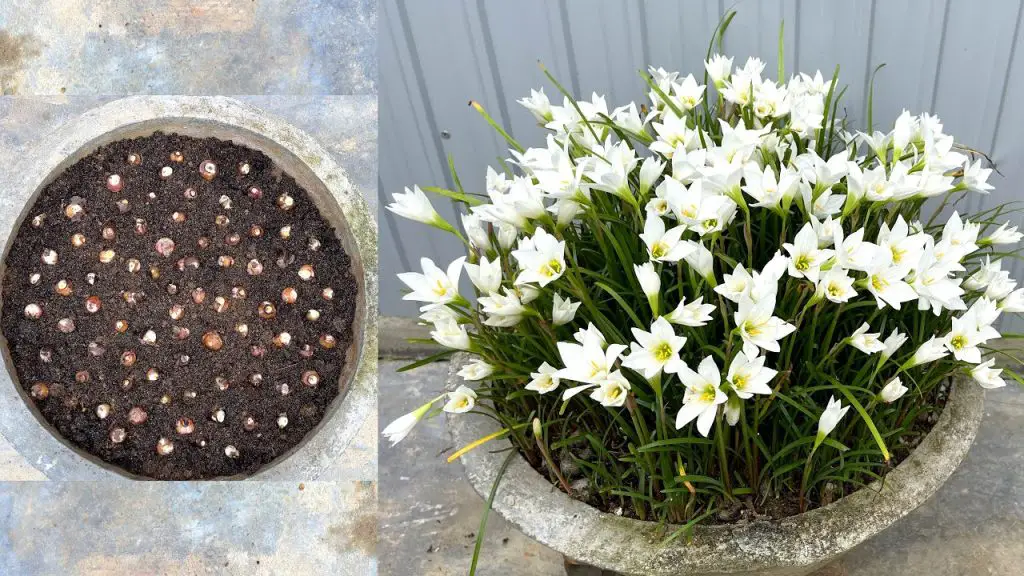
White rain lilies (Zephyranthes candida) are perennial plants native to Mexico and parts of the southern United States. Known for their delicate white blooms, they are often referred to as “rain lilies” because they tend to flower after heavy rain, giving the appearance of blooms appearing out of nowhere.
The flowers are funnel-shaped with six white petals, and they typically bloom in clusters. These compact plants have long, slender leaves and grow in clumps, making them perfect for creating naturalized flower beds or container gardens.
2. Choosing the Right Bulbs for Planting
When it comes to growing white rain lilies, choosing the right bulbs is essential for ensuring healthy growth and beautiful blooms. Here’s what to look for when selecting bulbs:
- Healthy Bulbs: Choose plump, firm bulbs that are free from mold, disease, or damage. Healthy bulbs are crucial for producing strong plants.
- Size Matters: Larger bulbs generally produce more robust plants with more blooms. Look for medium to large-sized bulbs for better results.
- Quality Source: Purchase bulbs from a reputable nursery, garden center, or online supplier to ensure you’re getting quality Zephyranthes bulbs.
3. When to Plant White Rain Lily Bulbs
White rain lilies thrive in warm climates, so timing your planting is key to their success. The best time to plant rain lily bulbs is typically in early spring or fall, depending on your local climate. Here’s what to consider:
- Spring Planting: In warmer regions, plant the bulbs after the last frost when the soil is starting to warm up.
- Fall Planting: If you’re in a milder climate, planting in the fall allows the bulbs to establish roots before the cooler winter months.
Regardless of when you plant, ensure that the soil temperature is consistently warm (around 60-70°F / 15-21°C) for optimal bulb growth.
4. Planting White Rain Lily Bulbs
Planting white rain lily bulbs is straightforward, but following the right steps will help ensure healthy, blooming plants. Here’s a simple step-by-step guide:
1. Prepare the Soil
- Location: Choose a sunny spot that receives at least 4-6 hours of direct sunlight per day. White rain lilies thrive in full sun but can tolerate light shade.
- Well-Draining Soil: These lilies prefer well-draining soil. If your soil is heavy or clay-like, amend it with organic matter like compost or sand to improve drainage.
- Soil pH: They prefer slightly acidic to neutral soil, with a pH range of 6.0-7.0.
2. Plant the Bulbs
- Depth: Dig a hole approximately 3-4 inches deep. Place the bulb in the hole with the pointed side up. Space the bulbs about 4-6 inches apart to allow room for the plants to spread.
- Cover with Soil: After placing the bulbs, cover them with soil and gently pat it down. Water the area lightly to settle the soil around the bulbs.
3. Watering:
After planting, water the bulbs thoroughly. White rain lilies like moist soil but do not tolerate standing water, so ensure the soil is well-drained. During the growing season, water regularly but allow the soil to dry out between waterings. They are drought-tolerant once established but will benefit from consistent moisture during flowering.
5. Caring for White Rain Lilies
Once you’ve planted your white rain lily bulbs, providing the right care will help your plants thrive. Here are some important tips:
1. Fertilizing
While white rain lilies don’t need heavy feeding, they will benefit from a light application of balanced fertilizer in the early spring as they begin to grow. Use a slow-release fertilizer or an organic option like compost. Avoid excessive nitrogen, as it can encourage foliage growth over flowers.
2. Mulching
Apply a light layer of mulch around the base of the plants to help retain moisture, suppress weeds, and keep the soil temperature consistent. Be careful not to mulch too heavily, as it can lead to rot.
3. Pruning and Deadheading
Once the blooms fade, remove the spent flowers by deadheading them to encourage more blooms. If the leaves become yellow or damaged, trim them back to keep the plant tidy. White rain lilies will typically go dormant after blooming, so allow the foliage to die back naturally before cutting it down for the season.
4. Winter Care (For Cooler Climates)
If you live in an area with cold winters, consider digging up the bulbs in fall and storing them in a cool, dry place until spring. In warmer climates, white rain lilies are hardy to zones 7-10, so they can stay in the ground year-round.
6. Common Problems and How to Solve Them
While white rain lilies are relatively easy to grow, there are a few issues you may encounter. Here are some tips for dealing with common problems:
- Poor Blooming: If your white rain lilies aren’t blooming, it could be due to inadequate sunlight or too much water. Ensure they are planted in a sunny spot and that the soil drains well. Additionally, check for nutrient deficiencies and consider feeding them with a balanced fertilizer.
- Bulb Rot: Overwatering or poor drainage can lead to bulb rot, especially in cooler climates. Make sure your soil is well-draining, and avoid letting water sit around the bulbs. If you’re planting in pots, ensure the pots have drainage holes.
- Pests: Rain lilies are relatively pest-resistant, but occasional pests like aphids or slugs may appear. Use natural pest control methods such as insecticidal soap or neem oil to treat infestations.
7. In Summary:
Growing white rain lilies from bulbs is a simple and rewarding process that results in beautiful, fragrant blooms that brighten up any garden. By selecting healthy bulbs, planting in well-drained soil, and providing proper care, you can enjoy the beauty of these rainlily flowers year after year. Whether you’re planting in a flower bed, a container, or along a garden border, white rain lilies will add a touch of elegance and charm to your outdoor space.