Grafting is a time-honored technique for propagating trees and plants, allowing gardeners to combine desirable traits from multiple specimens into one. If you’re looking to combine three papaya trees for enhanced fruit production or improved resilience, here’s a straightforward guide on how to use grafting to achieve this.
Why Graft Papaya Trees?
Grafting papaya trees offers several benefits:
- Enhanced Fruit Quality: By grafting different varieties, you can combine traits such as fruit size, taste, and yield.
- Improved Disease Resistance: Combining rootstocks and scion varieties can lead to trees that are more resistant to pests and diseases.
- Faster Fruit Production: Grafted trees often produce fruit faster than those grown from seeds.
Materials Needed
- Papaya Tree Cuttings: Healthy branches or shoots from the papaya trees you want to graft.
- Rootstock Papaya Tree: The tree onto which the cuttings will be grafted.
- Sharp Knife or Pruning Shears: For making clean cuts.
- Grafting Tape or Rubber Bands: To secure the grafts.
- Grafting Wax or Sealant: To protect and seal the grafting area.
- Clean Water: To keep the cuttings hydrated.
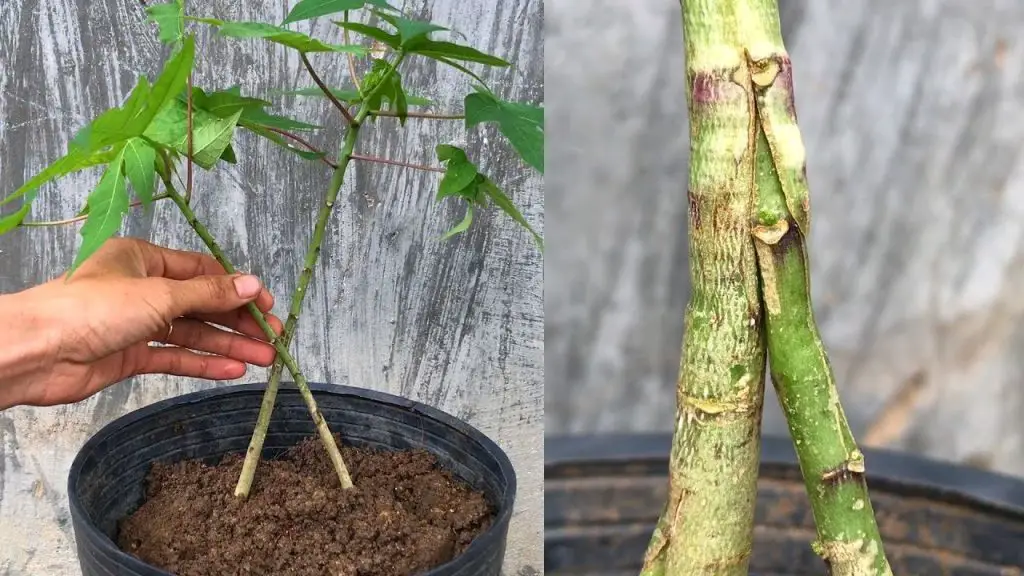
Steps to Graft Three Papaya Trees Together
- Select and Prepare the Rootstock:
- Choose a healthy, mature papaya tree to serve as the rootstock. The tree should be well-established and free from diseases.
- Make a clean cut on the trunk of the rootstock at a height where you plan to attach the grafts.
- Prepare the Scion Cuttings:
- Take cuttings from the other two papaya trees you want to graft. Each cutting should be approximately 6-8 inches long and have several healthy buds.
- Trim the ends of the cuttings to fit the grafting area on the rootstock. Make sure the cuttings are fresh and not wilted.
- Make the Graft Cuts:
- Cleft Grafting: Make a vertical slit in the rootstock where you will insert the cuttings.
- Tongue Grafting: Cut a small notch or tongue on the side of the rootstock and match it with a corresponding notch on the scion cutting. This helps the cambium layers (the growth tissues) align, which is crucial for successful grafting.
- Attach the Scions:
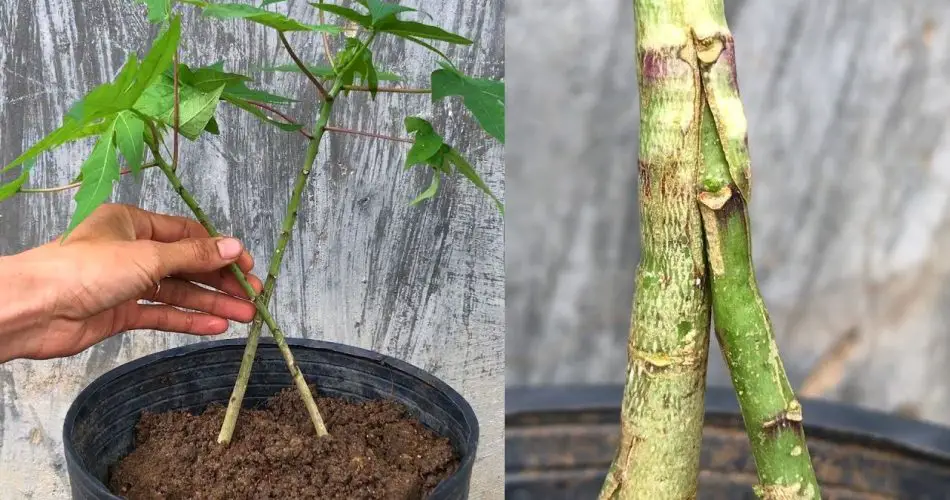
- Insert each scion into the prepared slits or notches on the rootstock. Ensure that the cambium layers of the scion and rootstock are aligned.
- Secure the grafts with grafting tape or rubber bands to hold them in place.
- Seal the Grafts:
- Apply grafting wax or a sealant around the grafting area to protect it from moisture and pests. This also helps to prevent infection and promotes healing.
- Care for the Grafted Trees:
- Water the trees regularly and keep them in a location with indirect sunlight until the grafts are established.
- Monitor the grafts for any signs of failure or disease. Remove any competing shoots or buds to ensure the grafts receive sufficient nutrients.
Benefits of Grafting Multiple Papaya Trees
- Increased Diversity: Grafting multiple varieties can result in a tree with a combination of desirable characteristics from each papaya type.
- Enhanced Production: A well-executed graft can lead to a more productive tree with improved fruit quality and yield.
- Space Efficiency: Grafting multiple trees onto one rootstock can save space in your garden while still providing a variety of fruits.
Additional Tips
- Timing: Perform grafting during the tree’s active growing season for the best results.
- Clean Tools: Always use clean, sharp tools to prevent infection and ensure smooth cuts.
Grafting papaya trees can be a rewarding process that enhances the quality and productivity of your fruit trees. By following these simple steps, you can successfully combine three papaya trees and enjoy a bountiful harvest of delicious fruit.
Copy
Show Comments