Propagating plants through leaf cuttings is a simple and rewarding method for expanding your garden. While it is commonly used for succulent and herbaceous plants, Peony leaf multiplication and growing Ixora coccinea from leaves are less traditional but can be achieved with patience and the right techniques. In this article, we’ll explore how to propagate peonies from leaf cuttings and how to successfully plant Ixora coccinea from leaves.

Peony Leaf Multiplication: A Step-by-Step Guide
Peonies are prized for their large, fragrant flowers and lush foliage. While they are often propagated through root division or buds, it is also possible to multiply peonies from leaf cuttings, though it requires careful attention. Here’s how to go about it:
1. Selecting the Right Peony Variety
Before starting the propagation process, it’s important to select the right peony variety for leaf multiplication. Herbaceous peonies are more likely to respond well to leaf cutting propagation than tree peonies. Choose a healthy peony plant that is disease-free to ensure that your cutting has the best chance of success.
2. Timing is Key
The best time to propagate peonies from leaves is during the spring or early summer when the plant is actively growing. Choose a healthy leaf that is fully developed but not too old or damaged. The leaf should be free of pests and diseases.
3. Cutting the Leaf
To begin, carefully cut a healthy peony leaf from the plant, ensuring you leave about 1 inch of the stem attached to the leaf. Make sure your cutting tool is sterilized to prevent the spread of any potential disease.
4. Preparing the Cutting for Rooting
After cutting the leaf, remove any excess foliage to leave only the leaf petiole (stem) intact. Dip the cut end of the petiole into rooting hormone to stimulate root growth. While this step is optional, it can improve the chances of successful propagation.
5. Planting the Leaf Cutting
Place the leaf cutting in a container filled with moist, well-draining soil. Ensure the petiole is submerged into the soil, but the leaf itself should be above the surface. Keep the soil moist but not soggy, as too much moisture can lead to rot. You can cover the cutting with a clear plastic bag or a plastic dome to create a humid environment that encourages rooting.
6. Provide Indirect Light and Warmth
Place the container in a bright, warm location, but avoid direct sunlight, as it can scorch the cutting. A spot with indirect light is ideal for promoting root development. Keep the soil consistently moist, and check for root growth after several weeks.
7. Transplanting
Once the leaf cutting has developed sufficient roots (usually in about 4 to 6 weeks), you can transplant it into a larger pot or directly into your garden. Gradually acclimate the young plant to full sunlight and continue to care for it as you would any other peony.
Planting Ixora Coccinea from Leaves
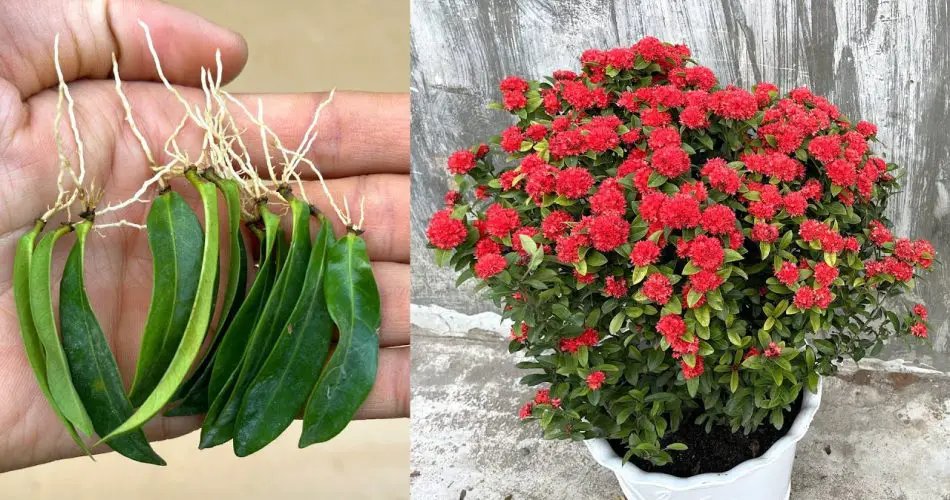
Ixora coccinea, also known as jungle flame or flame of the woods, is a tropical plant famous for its vibrant red, yellow, or orange flowers. While Ixora is often propagated using stem cuttings, it is possible to grow Ixora coccinea from leaves, although it may take longer and requires extra attention.
1. Selecting the Right Leaves
Start with healthy, mature leaves from a well-established Ixora coccinea plant. The leaves should be free of damage and pest infestations. Choose leaves that are fresh and not too old, as older leaves tend to have a lower success rate in propagation.
2. Preparing the Leaf Cutting
Cut the Ixora leaf with a clean, sharp pair of scissors. You can remove the leaf petiole (stem), leaving just the leaf blade. Trim any excess parts of the leaf to reduce moisture loss.
3. Rooting Hormone (Optional)
Although not strictly necessary, dipping the leaf in rooting hormone can increase the chances of successful rooting. Apply the hormone to the cut end of the leaf or the petiole.
4. Planting the Leaf Cutting
Place the prepared Ixora coccinea leaf in a shallow pot or tray with moist, well-draining soil. Be sure to plant the petiole (if present) into the soil while leaving the rest of the leaf exposed. Keep the leaf cutting in a humid environment by covering it with a plastic dome or placing it in a plastic bag.
5. Providing the Right Environment
To encourage root development, place the pot in a location with indirect sunlight and maintain consistent warmth. Humidity is crucial for Ixora coccinea cuttings to root successfully, so ensure the air around the leaf remains moist. You may need to mist the cutting lightly each day to help maintain the proper level of humidity.
6. Waiting for Roots to Develop
Rooting can take several weeks, sometimes even a couple of months, for Ixora coccinea. Be patient and regularly check for signs of root growth by gently tugging on the leaf. Once roots have developed, you can transplant the leaf into a larger pot or directly into your garden.
Challenges in Propagating from Leaves
While peony leaf multiplication and growing Ixora coccinea from leaves are fascinating propagation methods, there are challenges involved. These methods require patience and may not always yield successful results. Factors like leaf health, environmental conditions, and soil moisture can all impact the success of leaf propagation.
Additionally, it’s important to remember that not all plants can be successfully propagated through leaves, and some species may respond better to stem cuttings, division, or other propagation methods. However, with the right care and attention, both peonies and Ixora coccinea can be multiplied from leaves, offering gardeners the chance to expand their plant collection in unique ways.
Conclusion
Peony leaf multiplication and planting Ixora coccinea from leaves are both exciting propagation techniques that can help gardeners grow more plants from existing ones. By carefully selecting healthy leaves, providing the right environmental conditions, and using rooting hormones, you can successfully propagate these beautiful plants and enjoy a flourishing garden filled with vibrant flowers. While these methods may require time and patience, the rewards of watching new plants take root and grow make the effort worthwhile.