Grafting is an essential technique for cultivating beautiful roses. One popular method of grafting is known as eye budding, where a single bud or “eye” from a desired rose variety is grafted onto a compatible rootstock. Over the years, I have tried various methods for grafting rose eyes, and in this article, I’ll share some of the best techniques that have worked wonders for me.
What Is Eye Budding in Roses?

Eye budding involves the insertion of a single bud (or “eye”) from a rose cutting into a rootstock. The bud is carefully selected from a healthy rose plant, ensuring that it contains the genetic material for the desired characteristics—such as flower color, size, and fragrance.
The process of grafting a rose eye onto a rootstock is an effective way to propagate specific rose varieties, especially those that are difficult to grow from seeds. The rootstock provides a strong and healthy foundation, while the grafted bud ensures that the new plant will have the desired characteristics of the parent rose.
Steps for Grafting Rose Eyes
Here are the steps I follow for grafting rose eyes, ensuring success every time:
1. Choose the Right Rootstock
The first step in the grafting process is selecting a suitable rootstock. The rootstock should be healthy and compatible with the rose variety you want to propagate. I usually go with hardy rootstocks like Rosa multiflora or Rosa canina, as they provide strong growth and disease resistance.
Tips for Choosing Rootstock:
- Choose a disease-resistant rootstock to ensure healthy growth.
- The rootstock should be mature enough, but not too old.
- Ensure the rootstock is free from pests or any visible damage.
2. Select the Best Rose Bud
When selecting a rose bud for grafting, I always go for a healthy, mature bud that shows strong color and is just about to open. The best buds are typically located near the top of a young rose cane.
How to Select the Perfect Rose Bud:
- Look for buds that are firm and plump.
- Choose buds from a healthy plant that has good flower characteristics.
- Avoid buds with signs of disease or damage.
3. Prepare the Rootstock and Bud
To begin the grafting process, I prepare both the rootstock and rose bud. I make a T-shaped incision on the rootstock using a sharp knife or grafting tool, ensuring that the cut is deep enough to create a pocket for the rose eye.
Once the incision is made, I gently separate the bark to create space for the bud.
Tips for Cutting:
- Use a sharp knife to avoid damaging the plant tissue.
- The cut should be clean and precise to ensure the best chance of grafting success.
4. Inserting the Rose Eye
Now it’s time to insert the rose eye into the rootstock. I carefully place the bud into the T-shaped incision and align it with the rootstock’s cambium layer. The cambium layer is the thin layer of cells just beneath the bark, where the graft will take place.
Once the bud is positioned correctly, I gently press it into place, ensuring that the bud is snug and secure.
Pro Tips for Insertion:
- Always make sure the bud is facing outward to promote healthy growth.
- The cambium layers of both the rootstock and the bud should be in contact for successful grafting.
5. Securing the Graft
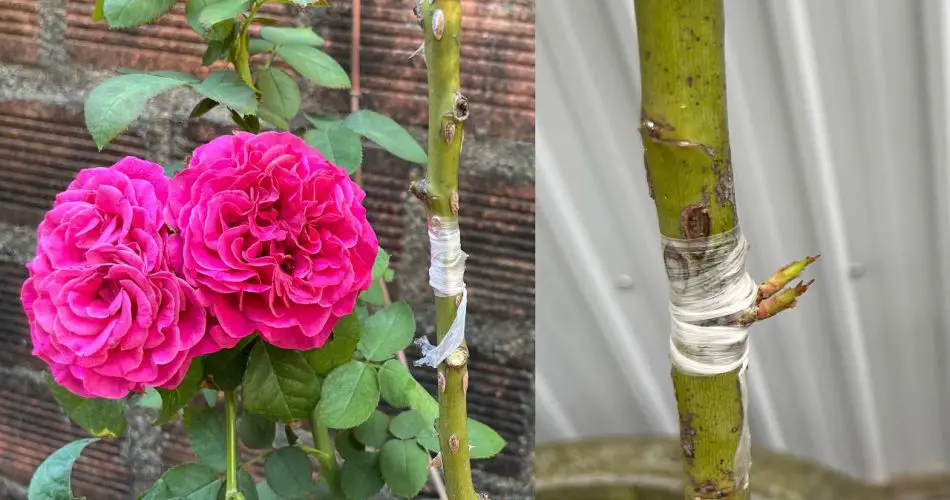
After inserting the rose bud, I use grafting tape or rubber bands to secure the graft. This helps keep the bud in place while it heals and fuses with the rootstock. I wrap the graft tightly but not too tightly, as the stem needs space to grow and expand.
Grafting Tape Tips:
- Make sure the grafting tape is firm but not constricting.
- Ensure the bud is protected from excess moisture during the healing process.
6. Caring for the Grafted Rose
After the graft is secured, I provide extra care to ensure the rose bud takes successfully. I place the plant in a warm, humid environment to encourage healing. If needed, I cover the graft with a plastic bag or grafting wax to help maintain moisture levels.
During the healing process, I monitor the graft for any signs of stress or infection. I also ensure the plant is watered regularly and kept in indirect sunlight.
Tips for Post-Grafting Care:
- Keep the grafted area moist but not soggy.
- Allow the bud to take root over several weeks, and keep it shaded from direct sunlight.
- Once the bud begins to show signs of growth, remove the grafting tape.
Best Rose Varieties for Grafting
Over the years, I’ve experimented with various rose varieties, and some have proven to be particularly successful for eye budding. Here are some of my favorites:
- Hybrid Tea Roses: Known for their large blooms and elegant shape.
- Floribunda Roses: These produce clusters of flowers and are often more disease-resistant.
- Climbing Roses: Ideal for creating beautiful vertical gardens or trellises.
- Old-Fashioned Roses: Known for their unique fragrance and timeless beauty.
Conclusion
Grafting rose eyes is a rewarding and effective method of propagating your favorite rose varieties. With the right techniques, it’s possible to achieve 100% success and grow a new rose plant that boasts all the characteristics of the parent plant.
Whether you’re a beginner or an experienced gardener, eye budding provides an exciting way to expand your rose collection and enhance your garden’s beauty. With practice and patience, you can enjoy the satisfaction of creating new rose plants that will thrive in your garden for years to come. 🌹